
Last updated November 16, 2026
 AC repair
 Furnace & heating
 Heat pumps
 Ductless mini splits
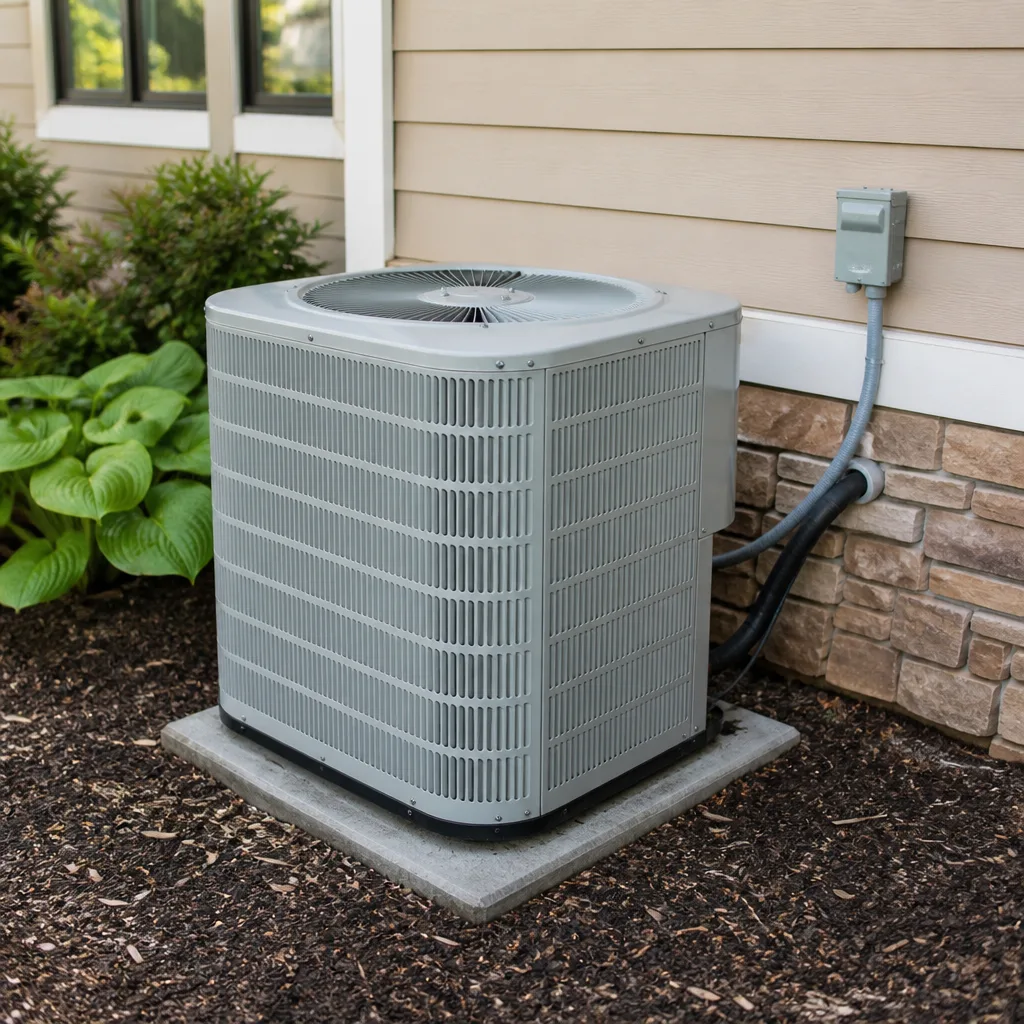 Carrier
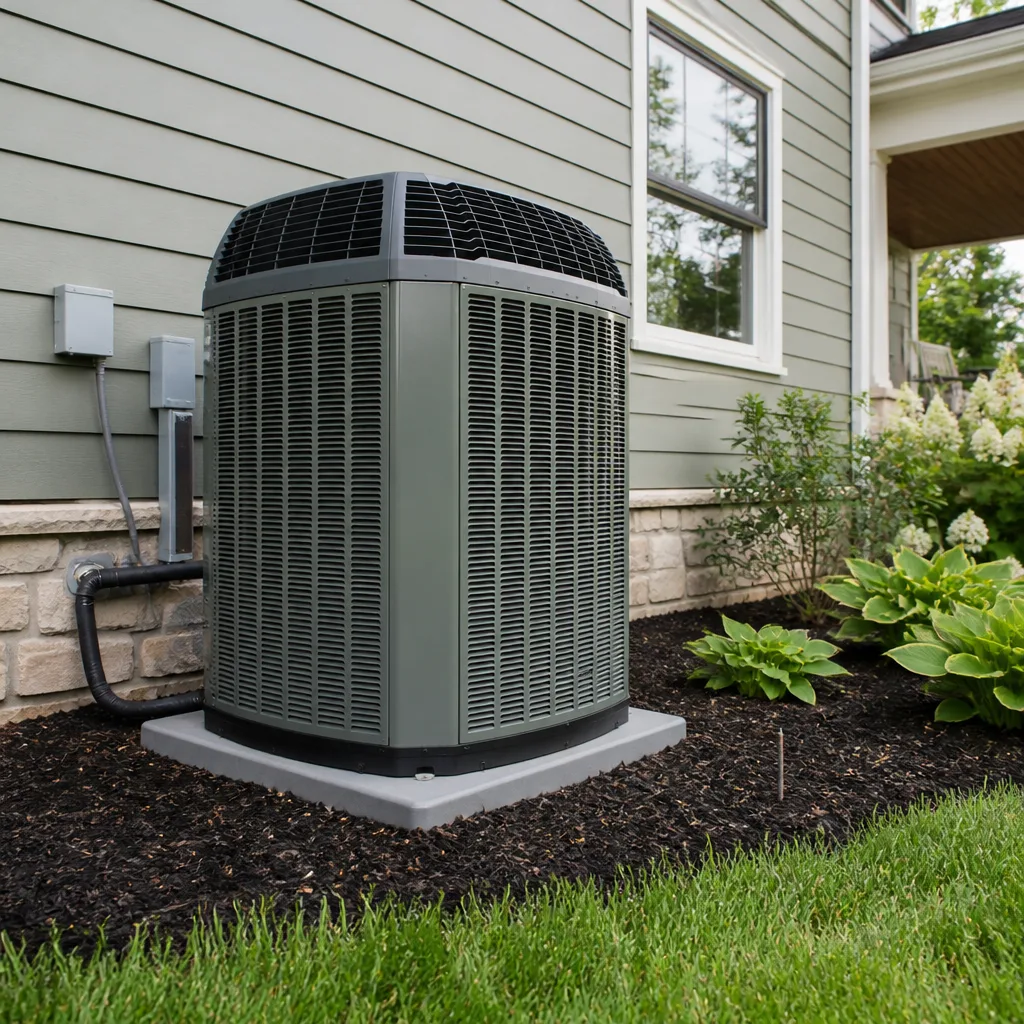 Trane
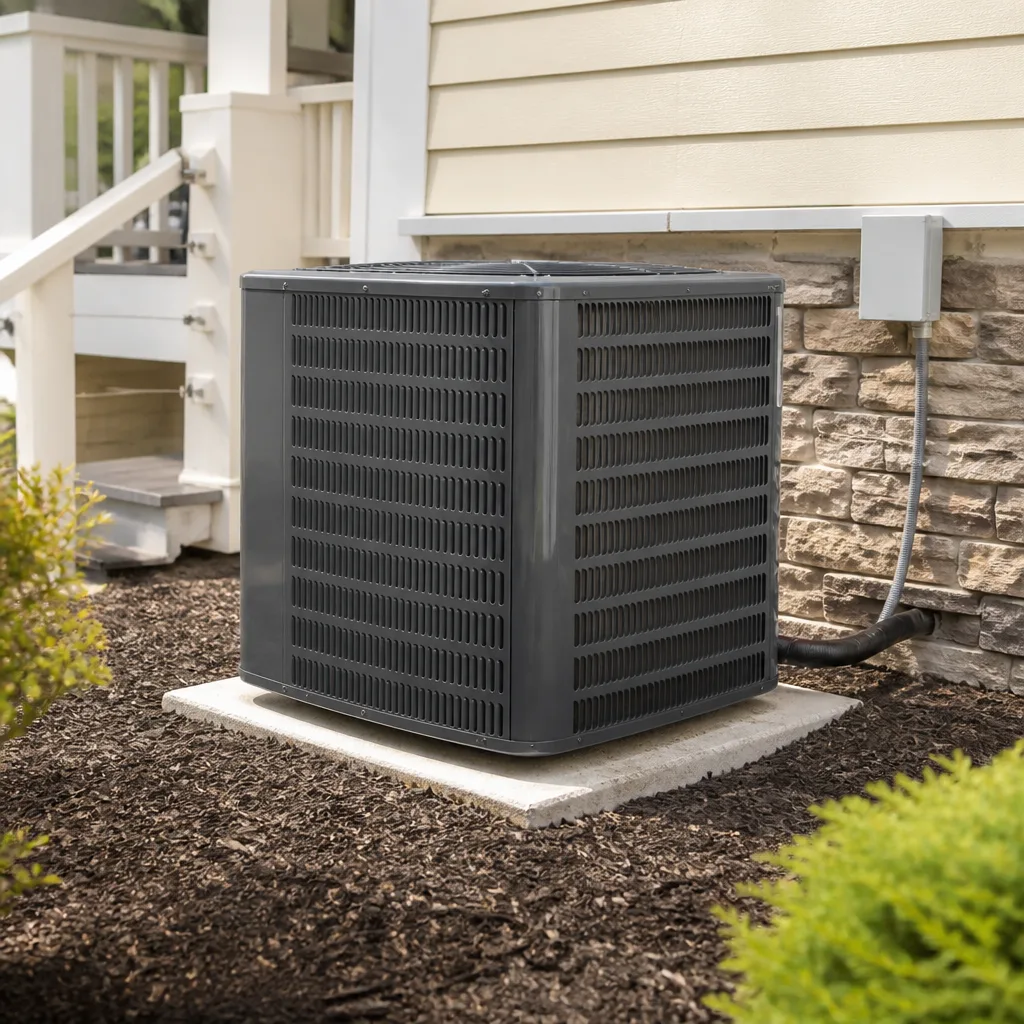 Goodman
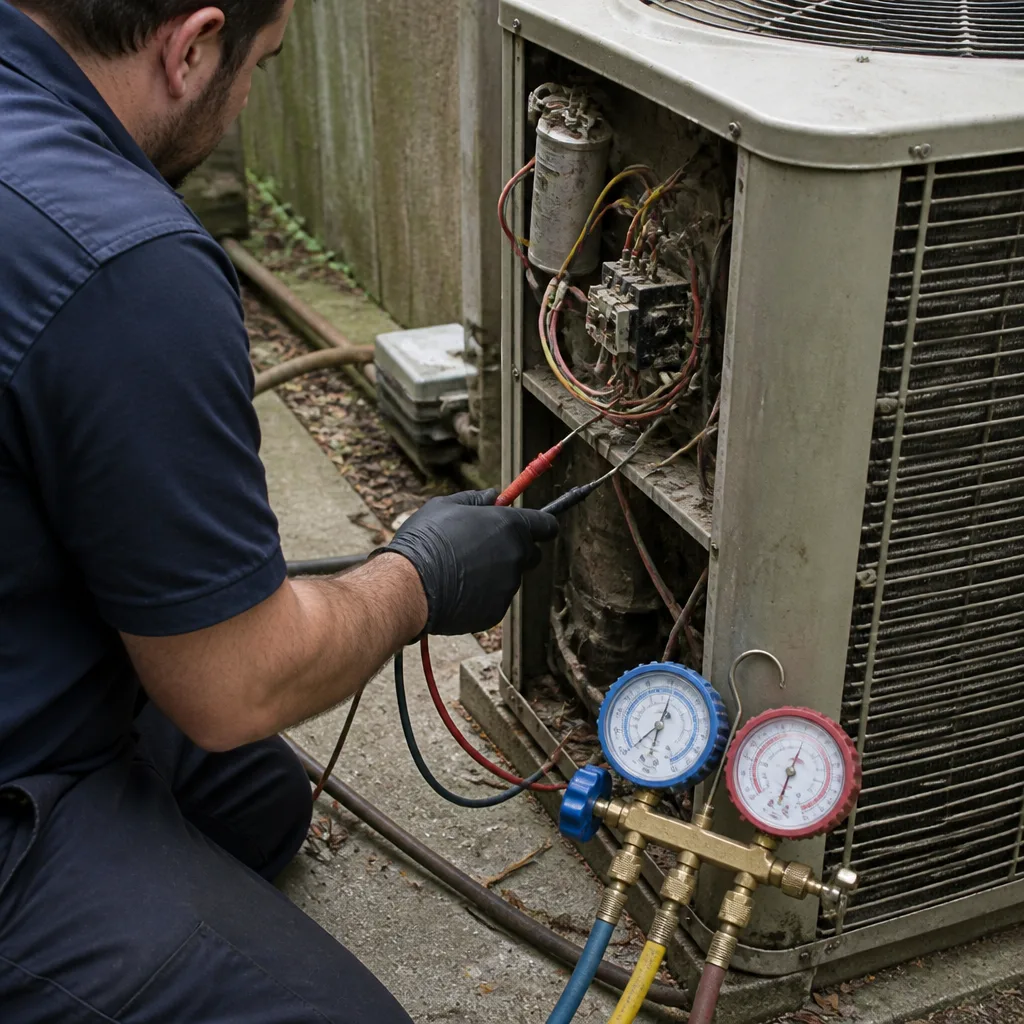
Seasonal tune-up and full diagnostic on your Carrier, Trane, or Goodman system - readings shown to you before any repair is proposed
Diagnosis first, numbers second - you approve the repair price before a single part goes in.
Get your free estimateHVAC Warning Signs: A Grand Prairie Homeowner’s Reference Guide
Most HVAC warning-sign articles tell you to watch for warm air and strange noises. That advice is fine, and it’s also why so many Grand Prairie homeowners call us after the damage is done. In our experience, the signals that matter most are the quiet ones: a system that runs all afternoon and never quite catches up, a faint click from a closet, a breaker that trips twice a summer and gets reset without a second thought. Those are the signals that show up months before a breakdown, and this guide walks through each one so you know what you’re hearing, what it means, and when to stop waiting.
Quick Answer
The most important HVAC warning signs in Grand Prairie are a system that runs constantly without cooling the house, short cycling, water around the indoor unit, breaker trips or a burning smell near the air handler, and any change in how the outdoor unit sounds. Any of these deserves a professional look, and electrical symptoms need same-day attention. Catching them early usually means a repair instead of a replacement.
Styles & brands we work with
- AC repair
- Furnace & heating
- Heat pumps
- Ductless mini splits
- Carrier
- Trane
- Goodman
Table of Contents
- Is Your System Working Hard or Failing? How to Tell the Difference
- Short Cycling: The Sound Grand Prairie Homeowners Miss
- Condensate Backup and the Safety Float Switch
- Electrical Warning Signs That Need Same-Day Attention
- Brand-Specific Failure Patterns: What Your System Sounds Like Before It Fails
- Age, Repair, or Replace: Reading the Signals Together
- A Seasonal Warning-Sign Checklist for Grand Prairie Homes
- Common Mistakes to Avoid
Is Your System Working Hard or Failing? How to Tell the Difference
Every air conditioner in Grand Prairie works hard in August. That’s normal. What isn’t normal is a system that works hard and still can’t hold the temperature you’ve set. The gap between those two situations is where most homeowners get stuck, because both sound the same from the living room: the outdoor unit is running, the fan is blowing, and the house feels roughly fine.
Here’s the difference we look for. A healthy system working a heavy Texas heat load will run long cycles, hold a steady indoor temperature, and shut off in the evening once the sun drops. A failing system will run just as long but slowly lose ground: the house creeps from 74 to 76 to 78 over an afternoon, and the system never gets a break. That creeping drift is the signal. It often points to a refrigerant charge that has dropped, which forces the compressor to work harder for every degree of cooling it produces.
By the time you actually feel warm air coming from the vents, a refrigerant-starved compressor may be hours from failure. We can’t count the number of times a homeowner has told us the system “seemed fine” right up until it stopped. It wasn’t fine. It was working twice as hard as it should have been, and the only difference was nobody measured the gap.
Three things to watch in Grand Prairie specifically:
- Long afternoon cycles with a house that slowly warms. Normal in peak heat; a problem if the drift repeats day after day.
- A system that never shuts off, even at night. West-facing rooms that bake all afternoon can push a marginal system past its limit.
- An outdoor unit that feels hot to the touch and runs louder than it used to. Heat rejection is struggling, and that’s usually charge or airflow.
If any of that sounds familiar, the right move is a diagnostic visit, not a guess. For the cooling side of the system, AC installation is the last resort; the first question is always whether a repair gets you another season.
Short Cycling: The Sound Grand Prairie Homeowners Miss
Short cycling is when your system turns on, runs for a few minutes, shuts off, and starts again shortly after, over and over. From another room it sounds like a system that’s doing its job. It isn’t. Short cycling wears out the compressor faster than almost any other failure mode because every start puts the hardest load on the motor, and a system that cycles ten times an hour is starting ten times as often as it should.
In Grand Prairie, short cycling is more common than most homeowners realize, and oversized equipment is a big part of why. A system that was sized for a larger house, or sized by rule of thumb rather than by a load calculation, will cool the space quickly and shut off before it has run long enough to pull humidity out of the air. The house feels cold and clammy at the same time. That’s the signature.
Other causes worth knowing:
- A clogged or restricted air filter. The most common and easiest to fix. Restricted airflow makes the system overheat and cut out on a safety switch.
- A failing thermostat or a thermostat placed in a bad spot. A sensor near a hot west-facing window reads warm when the rest of the house is fine.
- Low refrigerant. The system cools poorly, the compressor runs hot, and a pressure switch trips to protect it.
- An oversized unit. Common in homes where equipment was swapped over the years without a fresh load calculation.
Listen for a rhythm. A healthy system in Grand Prairie heat runs long cycles with long pauses between them. A short-cycling system produces a steady on-off beat, often every few minutes, and that beat is the sound of a compressor aging in real time. Our technicians have up to 12 years of experience and have learned that homeowners often describe short cycling as “the unit keeps kicking on and off” long before they think to call. When you hear that, call.
Condensate Backup and the Safety Float Switch
Every air conditioner in Grand Prairie produces condensate. On a humid summer night, a system running a long cycle can pull several gallons of water out of the air, and all of it has to drain somewhere. When that drain path clogs, water backs up into the indoor unit, and what happens next depends entirely on whether the safety float switch does its job.
The float switch is a small device in the drain pan or drain line that shuts the system off when water rises above a set level. It’s a simple part, and it’s a part that fails. When it does, the system keeps running with a full pan, and water goes where water goes: into the ceiling, the wall cavity, the insulation, or the floor beneath the air handler. In an attic installation, a failed float switch can cause ceiling damage before anyone notices anything is wrong.
Signs to watch for:
- Water stains or soft spots on the ceiling below an attic air handler. Check this after any stretch of humid weather.
- A musty smell near the indoor unit. Standing water in the pan or a wet drain line.
- The system shuts off on its own and won’t restart. Could be the float switch doing its job. Could be a switch that failed and a full pan you haven’t found yet.
- Visible algae or slime in the drain line. The most common cause of a clog in our climate.
One practical note for Grand Prairie homeowners: if your system has stopped and you find water, don’t reset the breaker and try again. Find the pan, confirm the drain is clear, and call. A float switch that keeps tripping is telling you the drain has a problem, and forcing the system back on only adds water. For heat-side issues that show up when the weather turns, our furnace repair page covers what a failing heating system sounds like before it quits.
Electrical Warning Signs That Need Same-Day Attention
Some HVAC symptoms can wait for a scheduled appointment. Electrical symptoms cannot. A breaker that trips repeatedly, a burning smell near the air handler, a scorched outlet, or a buzzing sound coming from a panel or disconnect are all signs that something in the electrical path is failing, and electrical failures can start fires. This is not a “watch it for a few days” situation.
A breaker trip is the one homeowners most often explain away. It trips once, gets reset, and everything seems fine. Then it trips again next month. A breaker tripping on an HVAC circuit is not random. Something is drawing more current than the circuit is designed for: a failing compressor, a loose connection, a motor on its way out, or a wire that has worked loose at a terminal. Each reset is a temporary fix on a real problem.
What to do if you notice any of the following:
- A burning or hot-plastic smell near the air handler or outdoor unit. Turn the system off at the thermostat. Don’t reset the breaker. Call.
- A breaker that trips more than once in a season. Leave it off and get a technician scheduled the same day.
- Buzzing, humming, or crackling from a panel or disconnect. Keep people away from the panel and call.
- Scorch marks, discoloration, or heat damage near any HVAC electrical component. That’s a sign of arcing. Get it looked at before the system runs again.
- A burning smell after the system starts. Sometimes it’s dust on a heat element on the first cold-morning startup. If it doesn’t clear within minutes, treat it as serious.
We’d rather tell you this plainly than soften it: HVAC electrical work is not a homeowner project. Panels, disconnects, and control wiring carry live voltage and can cause serious injury or fire. This is a job for a trained professional, and it’s one of the reasons we tell Grand Prairie homeowners not to put an electrical symptom on the schedule for next week. Call (866) 942-9965. We answer 24/7. Fast dispatch from 7am to 7pm, Sunday through Friday.
Brand-Specific Failure Patterns: What Your System Sounds Like Before It Fails
Equipment from different manufacturers fails in different ways, and knowing your brand gives you a head start on describing the problem accurately when you call. That matters. A technician who knows what a Carrier compressor sounds like before it locks up, versus a Trane or a Lennox, can prepare for the right diagnosis before arriving.
A few patterns we’ve observed across the brands we work on:
- Carrier. Compressors in older Carrier equipment often develop a rhythmic, low-pitched growl that gets louder over weeks before it locks up. Homeowners frequently describe it as “the unit sounds like it’s working harder.” That’s accurate. It usually is.
- Trane. Trane equipment tends to fail quietly. A compressor on its way out may produce a soft metallic tick at startup instead of a loud noise, which makes it easy to miss. Listen at startup, not just during the run.
- Lennox. Lennox systems often show contactor chatter before compressor failure: a rapid clicking from the outdoor unit as the system tries to start. If the unit clicks repeatedly and doesn’t come on, that’s the signal.
- Goodman. Goodman equipment is widely installed in value-tier homes, and the common failure pattern is a capacitor giving out. The system hums, doesn’t start, and the outdoor fan may spin while the compressor doesn’t.
None of these patterns are guarantees, and none of them replace a diagnostic visit. What they give you is vocabulary. When you call and say “my Trane ticks at startup” or “my Lennox clicks but doesn’t come on,” you’ve just told the technician something useful. We work on Carrier, Trane, Lennox, and Goodman, along with Rheem, York, Daikin, Bryant, and American Standard, so if you own one of those systems, we already know what we’re listening for.
Age, Repair, or Replace: Reading the Signals Together
Any single warning sign on this list can usually be repaired. What changes the math is when several signals show up together, or when they show up on an older system. A short-cycling system with a slight refrigerant leak and a breaker that’s tripped twice is telling you something different than a single symptom on its own.
We approach repair-or-replace with the same question every time: what gets the homeowner the most reliable cooling for the money? Sometimes that’s a repair, and we say so. Sometimes it’s a replacement, and we say that too. The answer depends on the system, the brand, and the pattern of failures, not on which option has the bigger ticket.
Here’s how we read the signals together:
- One symptom, one repair, older system. Fix the specific part. Keep the system running.
- Two or more symptoms at once, or a repeat of the same repair within a season. Look at the system as a whole, not the individual parts.
- Electrical symptoms plus a refrigerant issue. This combination often points to a compressor on its way out, and the repair math starts to tilt.
- Replacements driven by brand knowledge. A Carrier, Trane, or Lennox system that has been well maintained can often be repaired economically. A value-tier system that has already had several repairs may not be worth another one, and a Goodman replacement can make more sense than another round of parts.
When a replacement does make sense, the right system is the one that matches your house, not just the one that’s available on the truck. That’s a load calculation question first and a brand question second. We install Carrier, Trane, Lennox, and Goodman, which means premium and value-tier options are both on the table, and the decision stays with you. To learn more about the company behind this guide, visit Stallion AC Repair.
A Seasonal Warning-Sign Checklist for Grand Prairie Homes
The warning signs worth catching are the ones that build slowly, which means the best time to look is before the peak season arrives. Here’s what we tell Grand Prairie homeowners to check at the start of each cooling and heating season.
Before the cooling season (late spring):
- Change the air filter. A restricted filter is the number one avoidable cause of a system cutting out mid-summer.
- Check the condensate drain line and pan for slime or standing water.
- Run the system on a mild afternoon and listen for a steady on-off beat that suggests short cycling.
- Test the breaker for the outdoor unit. If it trips when the system starts, schedule a visit before the heat arrives.
- Clear any debris, leaves, or vegetation within a couple of feet of the outdoor unit.
Before the heating season (early fall):
- Run the furnace for a few minutes on the first cool morning and smell for anything other than a short-lived dust burn-off.
- Check the thermostat against a separate thermometer in the same room. A sensor that reads several degrees off is a common cause of comfort complaints.
- Look for any change in sound from the indoor air handler, especially a new rattle or hum at startup.
- Confirm the breaker for the heating system hasn’t tripped since last season.
- Note anything that’s changed since last year, even if it seems minor. Change is the signal.
If any item on either list turns up a problem, don’t wait for the season to start. Diagnosing an issue in mild weather is easier than diagnosing it in August or January, and it usually costs less in the end.
Common Mistakes to Avoid
- Resetting a tripping breaker more than once. A breaker that trips twice in a season is telling you something. Resetting it and moving on is how small electrical problems become expensive ones, and in a Grand Prairie summer, how a failed compressor gets blamed on a power surge.
- Assuming long run times are normal because “it’s Texas.” Long cycles are normal. Long cycles that slowly lose ground are not. The distinction matters more in Grand Prairie heat than in most places, and it’s the one homeowners most often miss.
- Ignoring short cycling because the house still feels cool. A short-cycling system cools the room and stops short of pulling out humidity. The house feels cool and damp, the air feels sticky, and the compressor wears out faster than it should.
- Treating a musty smell as a cleaning issue. A musty smell near the air handler is often a wet drain pan or a clogged condensate line. Left alone, it becomes ceiling damage in attic installations.
- Buying a new system without a load calculation. The right unit is sized to the house, not chosen from what’s on hand. A system that’s oversized for a Grand Prairie home will short cycle from day one.
- Calling a generalist for a brand-specific system. A technician trained on your brand knows the failure pattern. A technician guessing at it spends your money finding out. We work on Carrier, Trane, Lennox, and Goodman, and five more brands, so the pattern recognition is there before the visit.
- Waiting until the system won’t turn on at all. The single biggest cost difference in HVAC repair is the gap between “the system is behaving oddly” and “the system stopped.” Every signal in this guide moves you into the cheaper category.
When to Call a Professional
Call a professional when you notice any electrical symptom: a breaker tripping more than once, a burning smell near the air handler, a buzz or crackle from a panel or disconnect, or visible heat damage to any HVAC electrical component. Those are same-day calls. Call when the system runs constantly and the house slowly loses ground, when you hear a steady short-cycling beat, when you find water near the indoor unit, or when the sound of the outdoor unit has changed in a way you can describe. Call before replacing parts yourself, and call if the system is over a decade old and has needed more than one repair in the past season.
Stallion AC Repair offers free estimates in Grand Prairie. Call (866) 942-9965. We answer 24/7. Fast dispatch from 7am to 7pm, Sunday through Friday.
See the difference
 Before
 After
 Before
 After
 Before
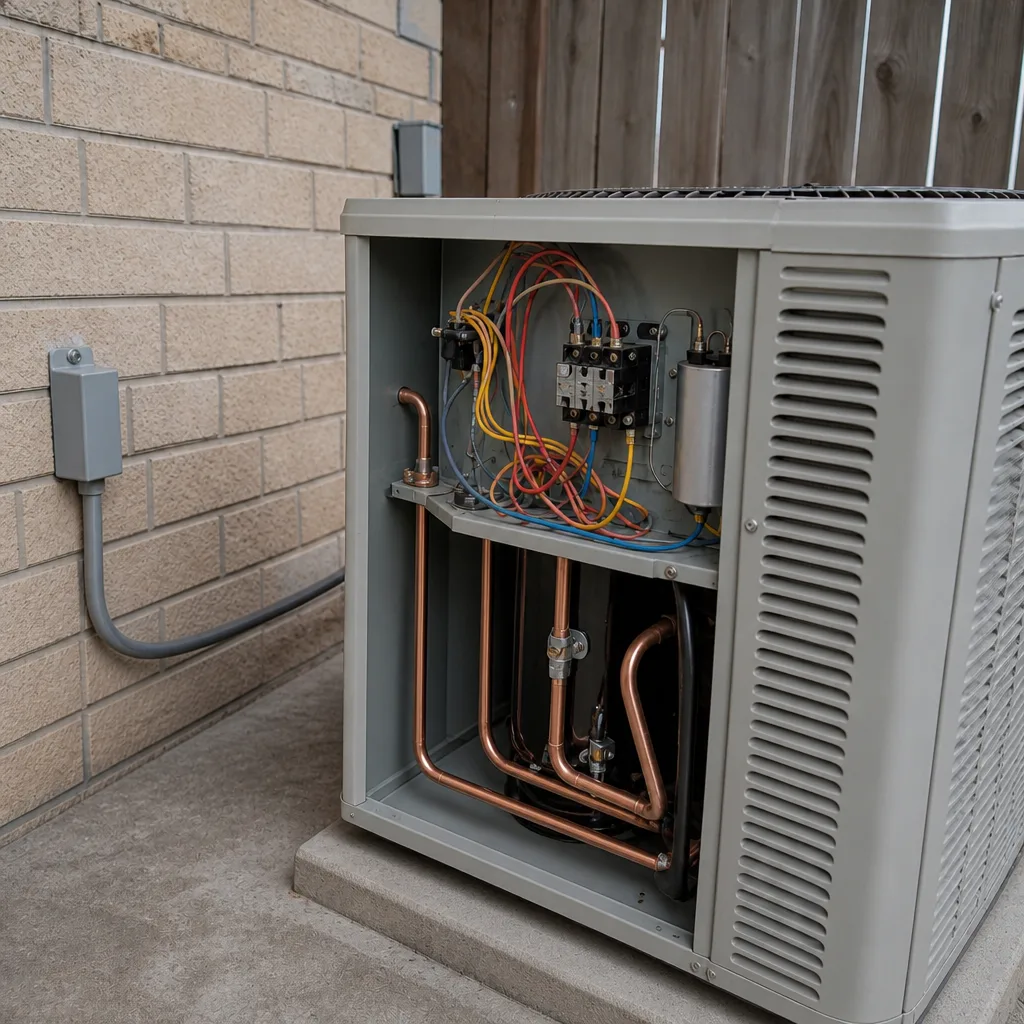 After
Frequently Asked Questions
The most common one we see is a system that runs continuously without holding the indoor temperature it used to hold. In Grand Prairie heat, that drift usually points to a refrigerant charge issue or restricted airflow, and it often appears weeks before the system stops entirely. Call (866) 942-9965 for an exact quote, since estimates are free.
Yes. Turn the system off at the thermostat and don’t reset the breaker. A burning or hot-plastic smell near the air handler or outdoor unit is a sign of an electrical fault, and the safest move is to leave the system off and get a technician out the same day. Call before you reset anything electrical.
Listen for the rhythm. Working hard means long run cycles with long pauses between them. Short cycling means the system kicks on and off every few minutes, over and over, and often fails to pull humidity out of the house. If you hear that beat, schedule a diagnostic visit. Estimates are free.
Water near the indoor unit almost always means a clogged condensate drain or a safety float switch that has failed. If the float switch is working, the system shuts off before the pan overflows. If it isn’t, water goes into the ceiling or the floor. Turn the system off and call us, especially in an attic installation where damage happens fast.
We can work with your insurer or warranty provider on the paperwork. The details of what’s covered depend on your specific policy, so we recommend having the policy information ready when you call. The diagnostic visit itself gives you a written explanation of what’s wrong and what the repair involves before anything proceeds.
It depends on how many symptoms you’re seeing and how often. One repair on an older system is usually worth doing. Two or more repairs in a single season, or an electrical symptom combined with a refrigerant issue, is usually a signal to price a replacement. We’ll give you a straight answer either way, and we install Carrier, Trane, Lennox, and Goodman systems across the price range. Call (866) 942-9965 to talk it through.
The Bottom Line
The warning signs that matter most in Grand Prairie are the ones that don’t look like emergencies yet: a house that slowly loses ground on a hot afternoon, a system that kicks on and off every few minutes, water near the indoor unit, a breaker that trips twice a season. Those signals show up weeks or months before a breakdown, and catching them early is usually the difference between a repair and a replacement. Electrical symptoms are the exception. Those are same-day calls, every time. Our technicians have up to 12 years of experience working on Carrier, Trane, Lennox, Goodman, and five other leading brands, so when you call, we’ll know what to listen for before we arrive. If you’re in Grand Prairie and something on this list sounds familiar, call (866) 942-9965 for a free estimate. We answer 24/7. Fast dispatch from 7am to 7pm, Sunday through Friday.
Written by the team at Stallion AC Repair.