
Last updated November 16, 2026
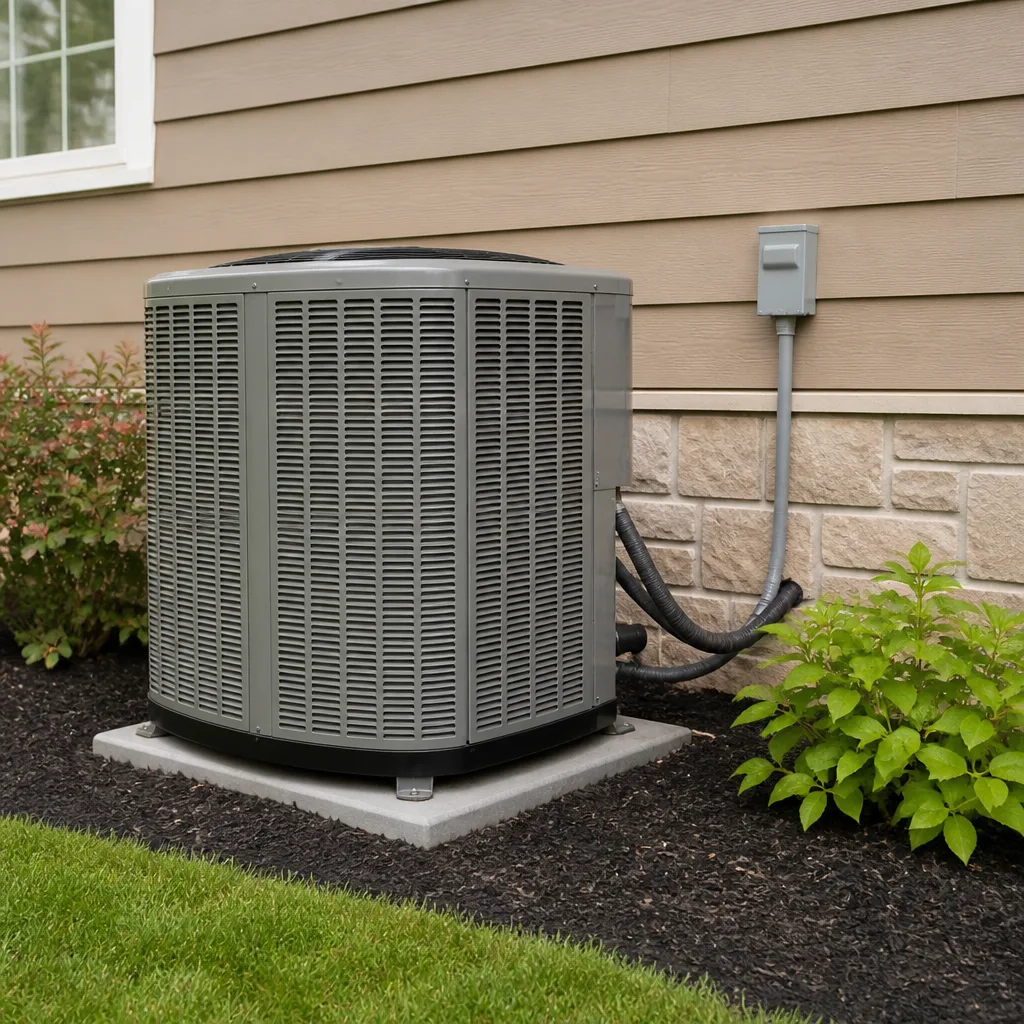 AC repair
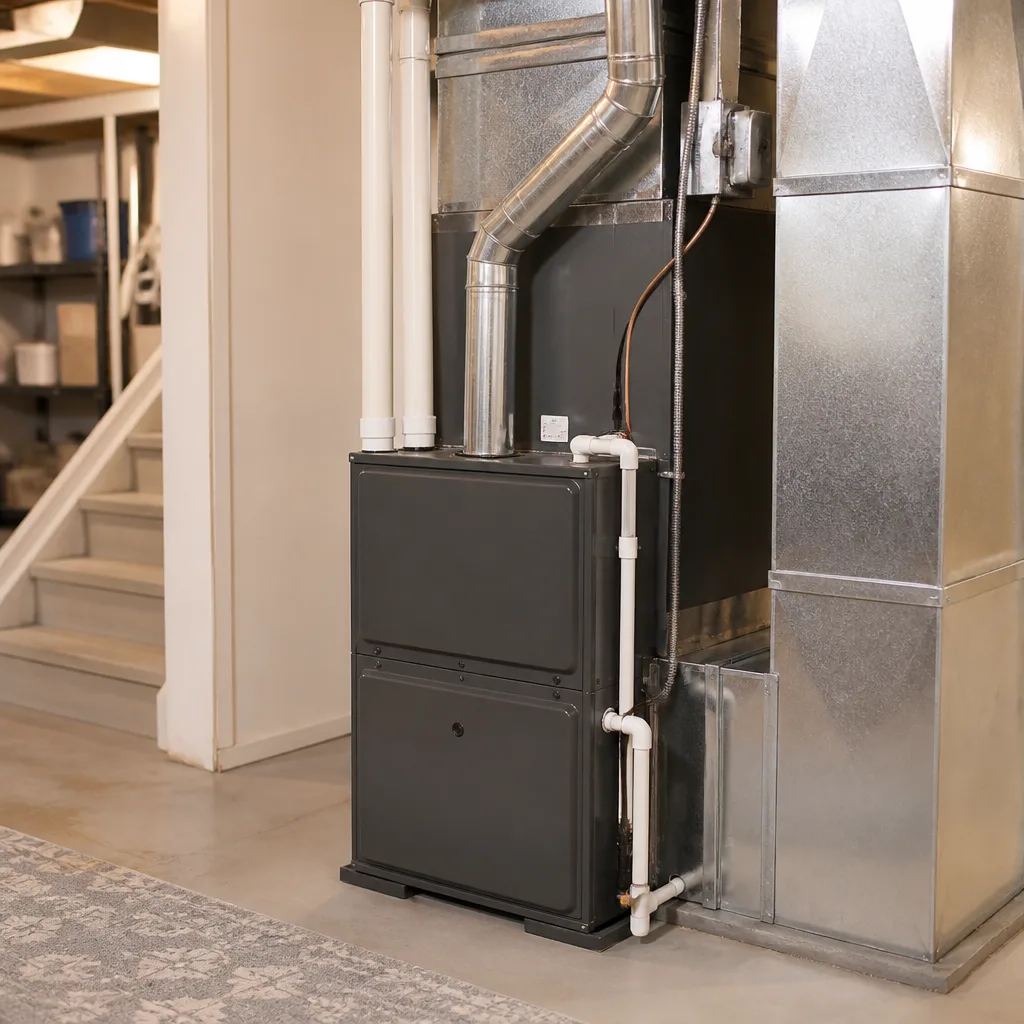 Furnace & heating
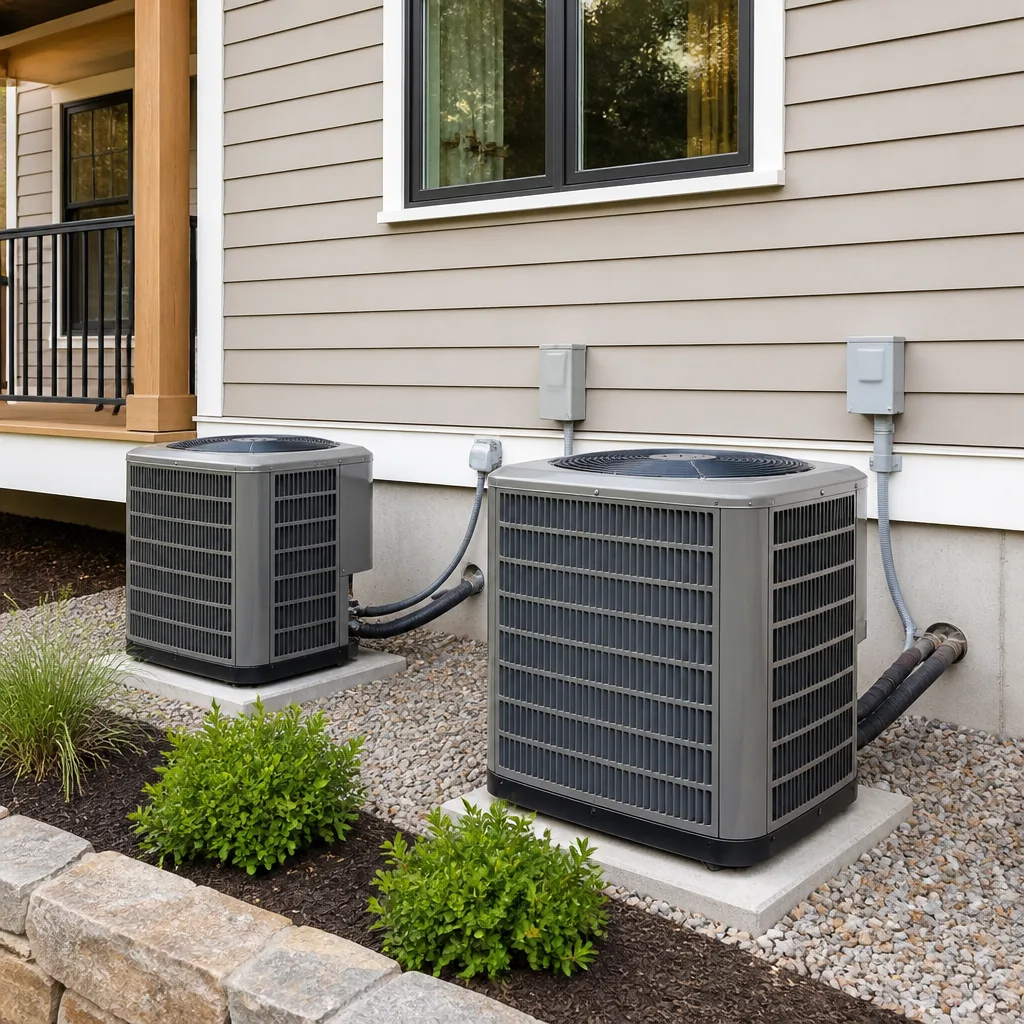 Heat pumps
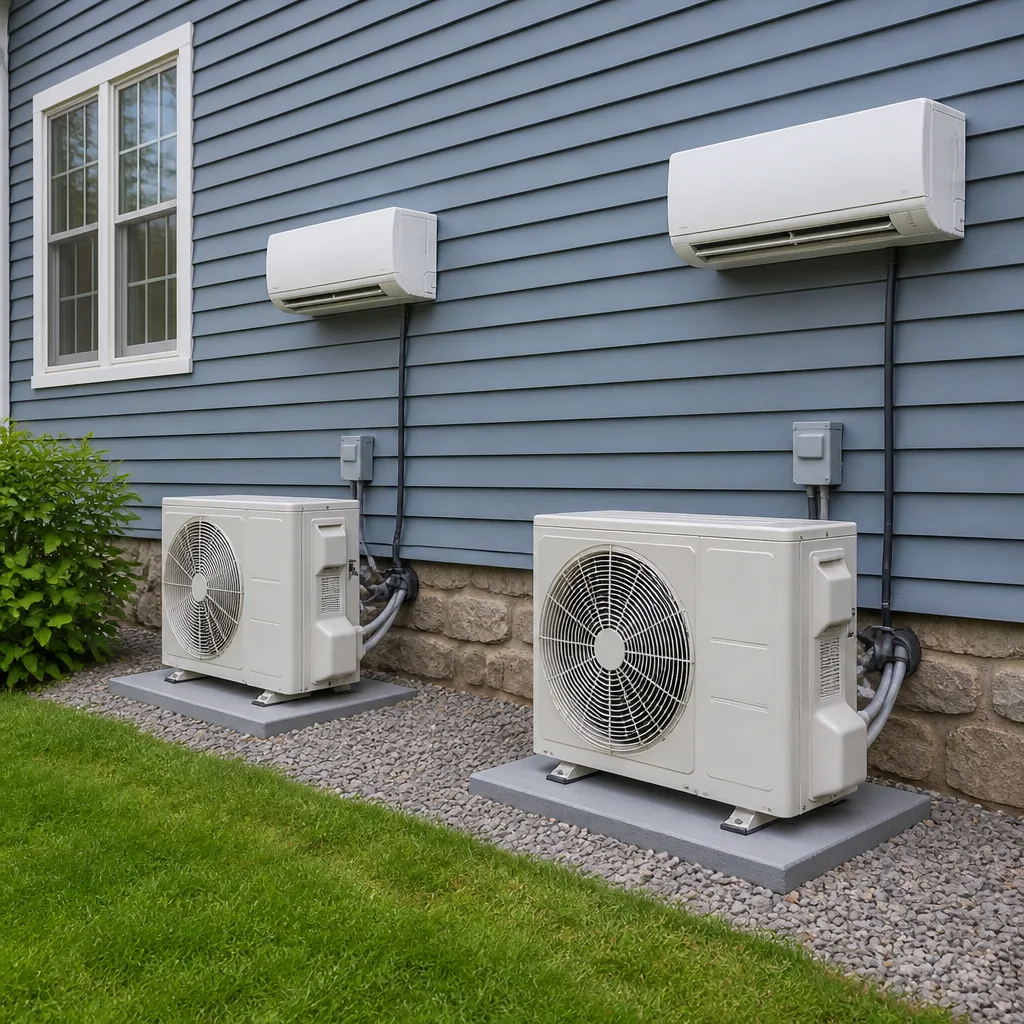 Ductless mini splits
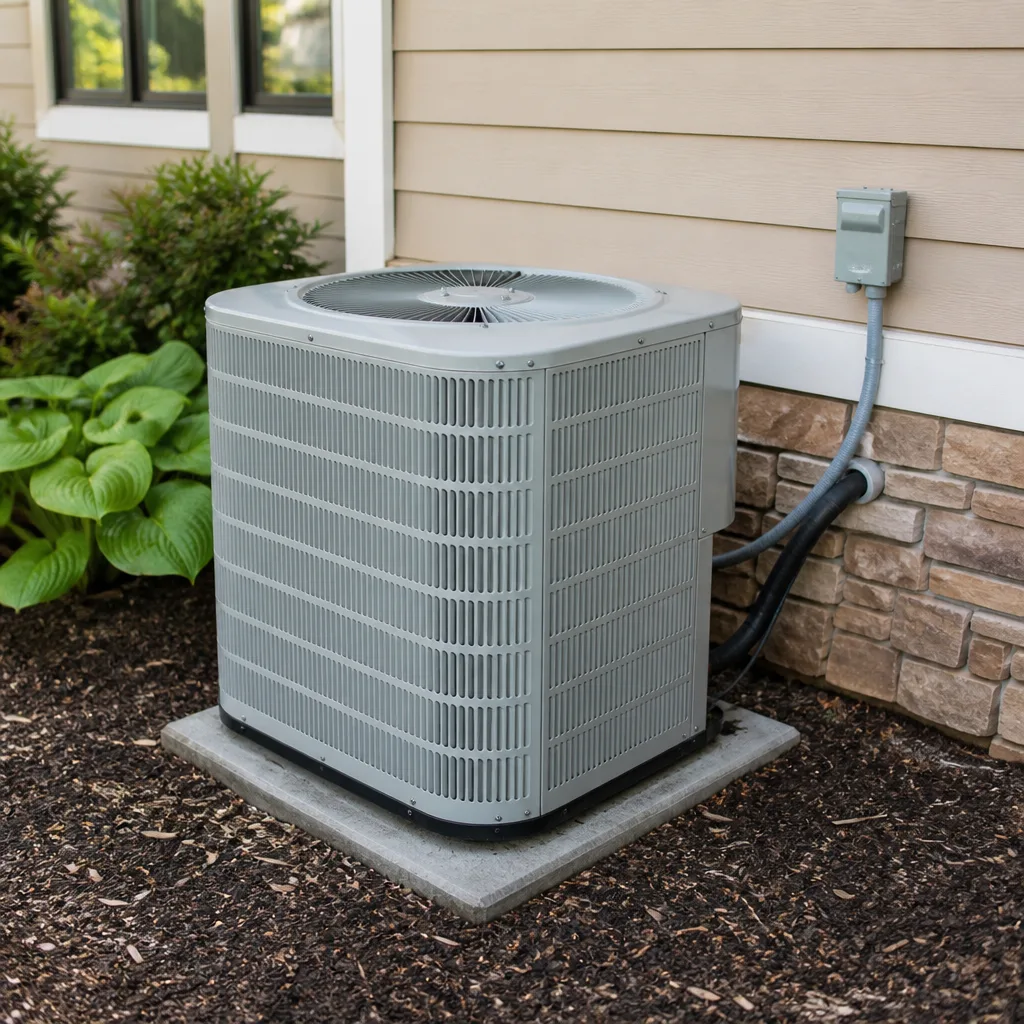 Carrier
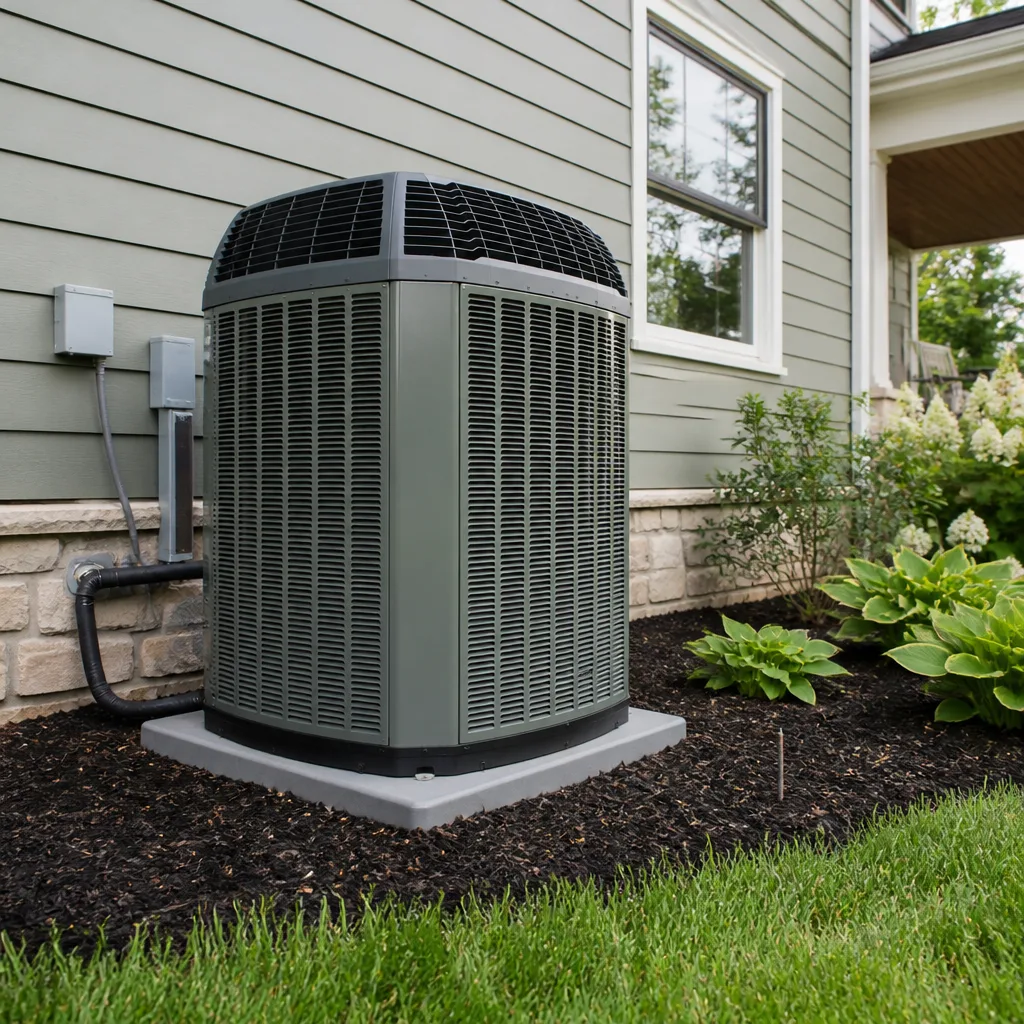 Trane
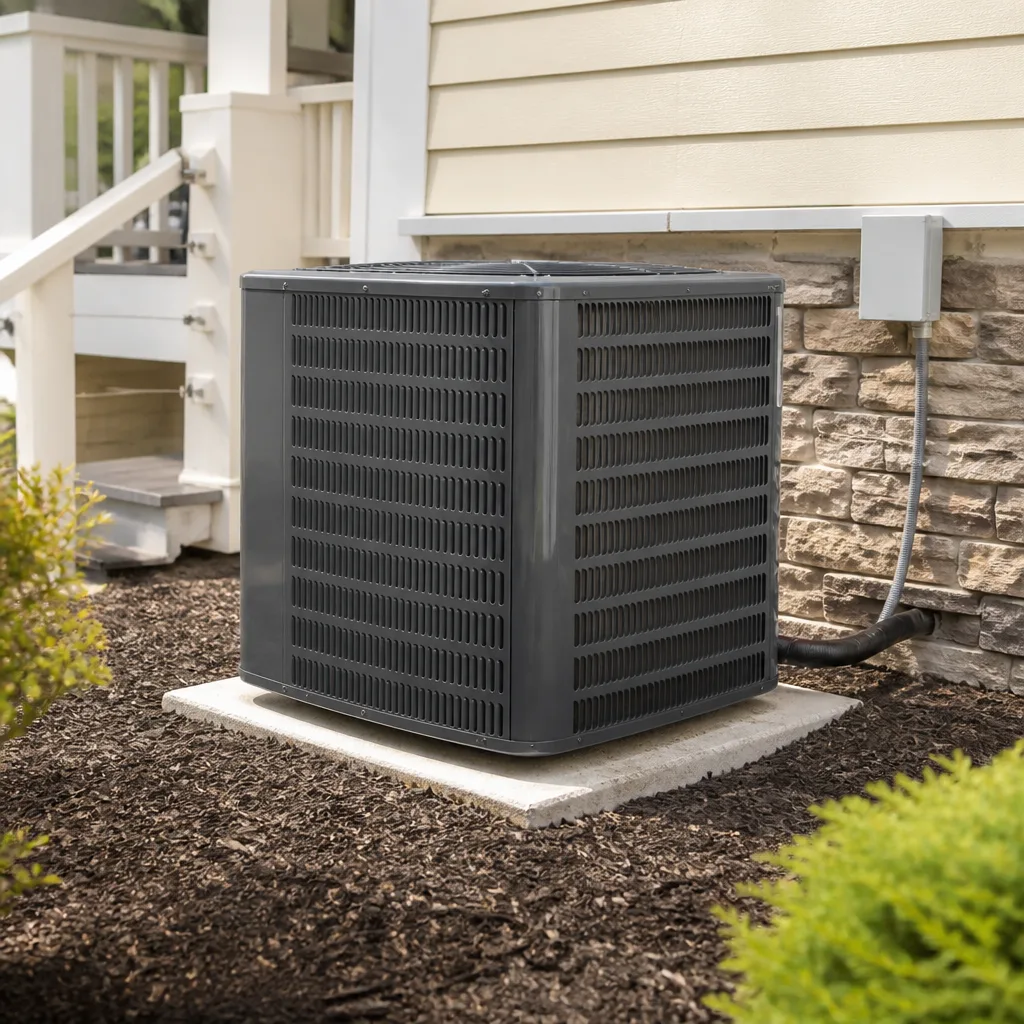 Goodman
Seasonal tune-up and full diagnostic on your Carrier, Trane, or Goodman system - readings shown to you before any repair is proposed
Diagnosis first, numbers second - you approve the repair price before a single part goes in.
Get your free estimateHVAC Emergency Preparedness Guide for Grand Prairie Homes
Grand Prairie’s HVAC emergencies tend to cluster around a few familiar stretches of weather and a predictable curve in equipment age. When the region hit 108°F for three straight days during the summer of 2023, contractors across Dallas-Fort Worth were booking emergency calls days out, and plenty of homeowners learned the hard way that a broken air conditioner in that kind of heat stops being an inconvenience and starts becoming a health question. The homes that rode it out comfortably weren’t lucky. They’d set up two things in advance that most people skip, and those two things decide whether you wait days for help or hours. This guide covers the full picture for Grand Prairie homeowners: how to prepare, what to check before you call, how to manage interior temperatures during a failure, and how to size an emergency kit that actually works. We’ll also show you how to read a repair quote when you’re under pressure and don’t have much leverage.
Quick Answer
The best HVAC emergency preparation for a Grand Prairie home is a confirmed relationship with a repair company before you need one, plus a few cheap spare parts and a properly sized backup cooling plan on hand. Most “emergencies” start as small failures that turn into health risks or inflated bills because the homeowner had no plan, no backup cooling, and nobody to call. Set up the relationship, keep a capacitor and filters stocked, and know the internal temperature that means it’s time to leave the house.
Styles & brands we work with
- AC repair
- Furnace & heating
- Heat pumps
- Ductless mini splits
- Carrier
- Trane
- Goodman
Table of Contents
- Why HVAC Emergencies Cluster in Grand Prairie
- The Two Pre-Season Steps That Change Everything
- How to Manage Indoor Heat When the AC Fails
- What to Check and Reset Yourself Before Calling
- How to Read an Emergency Repair Quote
- Building a Grand Prairie Emergency Cooling Kit
- The Winter Side: Furnace Failures in a Mild Climate
- The Year-Round Rhythm That Prevents Most Emergencies
Why HVAC Emergencies Cluster in Grand Prairie
HVAC failures don’t happen evenly across the calendar. They bunch up around specific conditions, and Grand Prairie sits right in the middle of a climate where those conditions repeat every year. Long stretches above 100°F put steady, maximum load on a cooling system for days at a time. That load is what pushes a weakening capacitor or a tired compressor over the edge. The same is true on the heating side in a different way: mild winters mean furnaces sit idle for months, then get fired up on the first cold night, and the parts that were never tested during the off-season are the ones that fail.
Two patterns drive most of what we see in Grand Prairie:
- Heat-driven cooling failures arrive in the first real heat wave of the summer and again at the tail end of a long one. Equipment that was marginal in May becomes a problem in July.
- Age-driven failures line up with the end of a system’s useful life. Most central air conditioners and furnaces run well for 12 to 15 years and then start needing repair decisions. Once a unit is in that window, the failure is usually a question of when, not if.
The neighborhoods around Joe Pool Lake and the older pockets near downtown Grand Prairie feel this differently than the newer subdivisions off I-20 and Highway 161. Older homes often have equipment that’s already been replaced once and may run on thinner ductwork, so a failure there can be harder to diagnose without seeing the whole system. Newer builds tend to have equipment still under a decade old, where an emergency is more likely a single failed component than a system ready to retire. Understanding which side of that line your home sits on tells you a lot about what kind of emergency you’re actually facing. For a deeper look at the city itself, see our page on Grand Prairie.
The Two Pre-Season Steps That Change Everything
When a heat emergency hits, the difference between waiting days and waiting hours comes down to two things you either did or didn’t do before the season started. Neither costs much, and together they’re the most useful preparation a Grand Prairie homeowner can do.
Step 1: Confirm a service relationship before you need it
During a regional heat event, every HVAC company in the area gets flooded with calls at once. The companies already booked out furthest are the ones taking new customers cold. The homeowner with an existing account, someone who knows their equipment and their address, gets worked in faster for a simple reason: the dispatcher already has their information, and the technician already knows what’s in the house. It’s the same logic as having a primary care doctor. Establishing that relationship in spring, when the schedule is open, is how you avoid being the person calling a stranger during a crisis.
We work on Carrier, Trane, Lennox, Goodman, Rheem, York, Daikin, Bryant, and American Standard equipment. If your system is one of those and you tell us the model before the season, our technicians arrive knowing your specific equipment instead of spending your time figuring it out on site. Learning your system before an emergency is one of the real reasons to have an established contact.
Step 2: Keep a spare run capacitor and filters on hand
The run capacitor is one of the most common failure points in a cooling system, and in a heat wave it’s one of the first parts to give out. It’s a small, inexpensive component, and having the right one for your system on hand can mean the difference between a quick fix and a multi-day wait during a surge. Your filter should be changed on schedule so a clogged one doesn’t mimic a bigger failure. Both are simple items. Neither is a substitute for a proper diagnosis. But when the service queue is days deep, having the obvious suspects covered buys real time. Ask any technician during a routine visit what capacitor your unit uses. Note it down. That’s the preparation most homeowners never bother with, and it’s the one that pays off.
If you’d like a permanent fix, a well-matched new system also removes the failure risk. See our guide on ac installation for what that involves.
How to Manage Indoor Heat When the AC Fails
When it’s above 100°F outside and the air conditioner stops, indoor temperatures climb faster than most people expect, and the threat isn’t discomfort. It’s the risk to elderly residents, infants, and anyone with a medical condition that makes heat dangerous. Knowing how to manage the house during a failure is what keeps a repair appointment from becoming a health emergency.
Seal off the rooms you don’t need
Close doors to bedrooms, laundry rooms, and any space you aren’t actively using. Concentrate everyone and every fan into one or two rooms. Small spaces cool faster with portable units, and blocking off unused rooms keeps the cooler air where it does some good.
Close blinds and block direct sun
Grand Prairie afternoons put a lot of direct sun through west- and south-facing windows. Closing blinds and curtains cuts the heat gain noticeably. If you don’t have blackout coverings, hang a light-colored sheet or blanket over the hottest windows.
Move air, don’t just sit in it
Box fans and ceiling fans move air, and moving air helps the body shed heat even when the indoor temperature is high. Position fans to pull cooler night air in through windows once the sun goes down. Avoid running the oven or dryer during the hottest part of the day.
Know the internal temperature that means leave
If the indoor temperature climbs above roughly 90°F and you have anyone in the home who’s elderly, very young, or medically fragile, that’s the point to relocate to a cooled space, a relative’s home, a library, or a cooling center. Don’t wait for symptoms. Heat illness in vulnerable people moves faster than most families expect. For healthy adults, the same threshold is a reasonable signal to get somewhere cool for a while rather than tough it out.
If the failure is on the heating side in winter, the concern is reversed but just as real. Mild Grand Prairie winters still bring cold snaps, and an unheated home overnight in a cold front is a genuine risk for the same vulnerable residents.
What to Check and Reset Yourself Before Calling
Roughly one in five calls that come in as emergencies get resolved without a service visit. That’s not a knock on the caller. It’s a reflection of how often the actual problem is something a homeowner can safely check and reset in a few minutes. Going through the list below before you call can save you a wait, and it costs nothing.
- Check the thermostat setting and mode. Confirm it’s set to cool (not heat or fan-only), and that the setpoint is actually below the current indoor temperature. A bumped mode switch is more common than people think.
- Check the breaker. Look at the panel for a tripped breaker on the air handler or condenser circuit. If it’s tripped, reset it once. If it trips again, stop. That’s a real problem and it needs a technician.
- Check the air filter. A heavily clogged filter restricts airflow enough to freeze the coil or overheat the system. If it’s visibly dirty, change it.
- Check the outdoor unit. Make sure the condenser isn’t blocked by debris, leaves, or a piece of furniture. Clear the area around it.
- Check the float switch. Many systems have a condensate float switch that shuts the unit off if the drain line clogs. Look for a wet drain pan or a drain line with standing water.
- Check the disconnect. The outdoor unit has a service disconnect nearby. Confirm it’s in the on position.
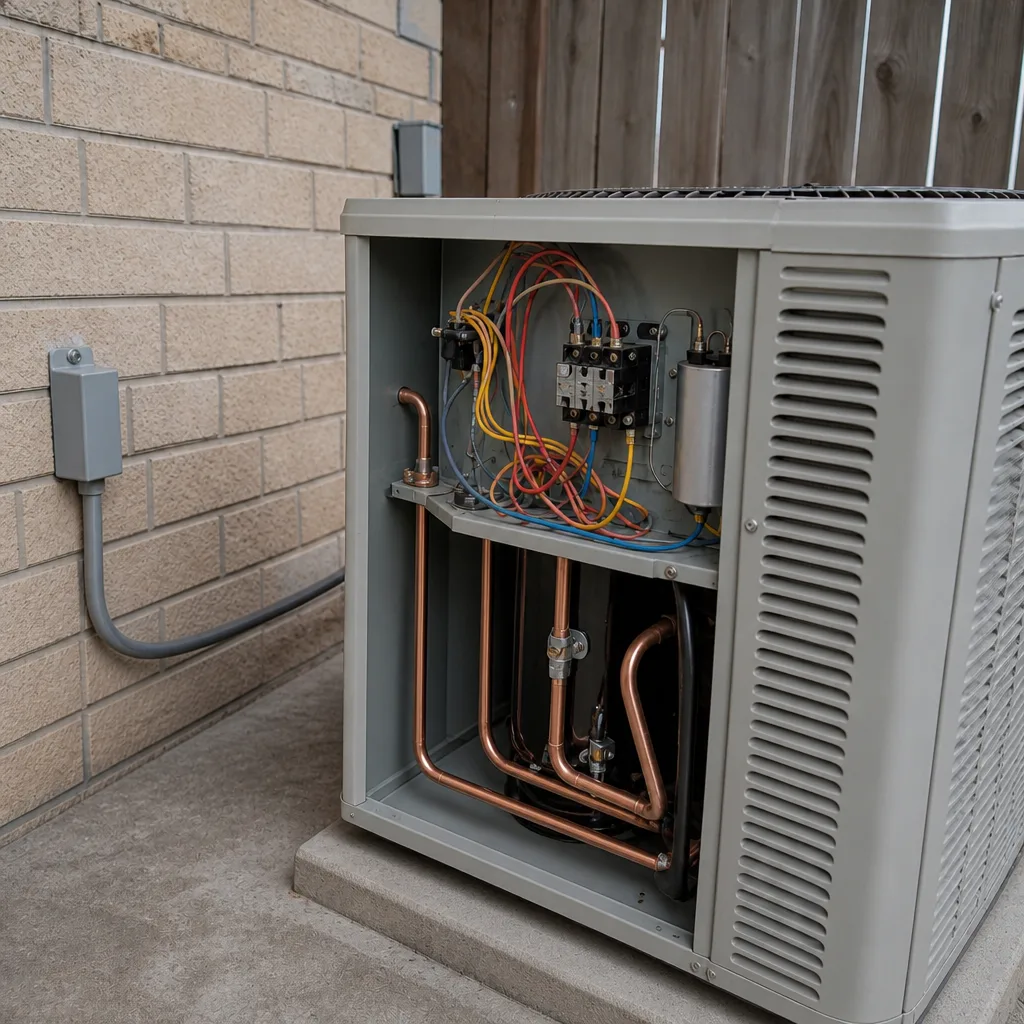
A few things you should not touch. Never open the electrical panel or the service disconnect, and never open the outdoor unit itself. There’s line voltage inside, and it can cause serious injury. Capacitors and contactors keep a charge even with power off. If anything past the thermostat and the breaker needs attention, that’s a job for a trained technician. Call furnace repair for the heating side and us for cooling, and we’ll tell you what to check before we come out.
How to Read an Emergency Repair Quote
When you’re sitting in a hot house and the technician is standing in front of you, that’s not when you have the most leverage to negotiate. It’s also not the time to accept a number you don’t understand. What separates a legitimate repair quote from a predatory one comes down to a few clear things: whether the price is written down before work starts, whether the diagnosis is explained in plain language, and whether you’re being offered a menu of options or a single take-it-or-leave-it number. We work on the written estimate principle. You get the number before the work happens, and the price is set per job.
Here’s what a fair repair quote looks like in a genuine emergency:
- The diagnosis is explained. You should know what part failed and why. If the answer is “the whole system,” ask what specifically failed.
- The price is written. You see the number before anyone starts work. Verbal-only quotes during a crisis are a red flag.
- The repair-or-replace call is honest. We’ll tell you if you’re better off repairing a Goodman or Rheem unit that’s five years old, or if you’re throwing money at a system that’s ready to retire. The recommendation shouldn’t default to whichever option has a bigger ticket.
- You get options. A fair quote gives you a realistic repair and, if replacement is on the table, a conversation about what that means. Not a single number pushed at you.
What we would not expect you to accept is a price that changes after the job starts, a diagnosis you can’t follow, or a “while we’re here we should replace the whole system” pitch that ignores the actual age and condition of the equipment. Emergency situations are exactly when a straight answer matters most. If you want a fair read on what a repair should actually involve, get a second opinion, and get it in writing.
Building a Grand Prairie Emergency Cooling Kit
A backup cooling plan is one of the most useful investments a Grand Prairie homeowner can make, and it’s easy to get wrong. Most people buy the first portable unit they find, then discover it cools one room and leaves the rest of the house to bake. Buying the right size for the space is the whole game. Too small and it does nothing. Too large and you paid for capacity you’ll never use.
The realistic cooling capacity numbers
Portable air conditioners are rated in BTUs. As a working rule:
- 5,000 – 6,000 BTU will cool roughly 100 – 150 square feet, which is a small bedroom.
- 8,000 – 10,000 BTU will handle about 200 – 300 square feet, a moderate bedroom or small living space.
- 12,000 – 14,000 BTU is right for 400 – 500 square feet, a large bedroom or a small open-plan room.
Those numbers assume the room is closed off with a door, and that the unit has somewhere to vent hot exhaust air, usually through a window. In an open-plan Grand Prairie home, closing off the room you’re cooling is what makes these numbers work at all. A single 10,000 BTU unit cooling a sealed bedroom is far more useful than the same unit trying to cool half the house.
What else belongs in the kit
- Battery-powered fans. Ceiling fans run off house power, which may be out during a storm. A battery fan or two keeps air moving.
- A backup power source. If your kit depends on any portable unit that plugs in, a small generator or portable power station keeps it running during an outage. Match the power source to the unit’s actual draw.
- Drinking water and a way to stay hydrated. Heat illness risk drops when people are drinking water and not waiting for symptoms. Keep more than you think you need.
- Window coverings for the hottest rooms. A light-colored sheet and a way to hang it. Cheap and effective.
- Your service contact information, written down. Not in a phone that might be dead. Written where you can find it.
- A thermometer for the room you’re using. Knowing the actual indoor temperature is what turns a vague worry into a clear decision about when to leave.
A kit like this is not a substitute for a working system. It’s what keeps a failure from becoming a crisis while you wait for repair. The cost is modest compared with an emergency you weren’t ready for.
The Winter Side: Furnace Failures in a Mild Climate
Grand Prairie winters are mild, and that’s exactly why furnace failures catch people off guard. Equipment that sat idle from spring to fall gets fired up on the first cold night, and the parts that weren’t tested are the ones that fail. The risk is real for the same vulnerable residents who are at risk during a summer AC failure. Two things matter during a winter breakdown. First, know the safe way to keep the house warm without a working furnace. Space heaters carry real fire risk and should never be left unattended. Second, treat a carbon monoxide alarm or a gas smell as an immediate reason to leave the house and call for help, not to keep troubleshooting.
Our technicians are trained on heating and cooling, so a furnace problem in January doesn’t mean calling a different contractor than the one who fixed your air conditioner in July. One company, one set of records, and a straight answer about whether the furnace needs a repair or a replacement. See our page on furnace repair for how that visit works.
The Year-Round Rhythm That Prevents Most Emergencies
The best emergency is the one you never have. A maintenance rhythm that fits a Grand Prairie climate looks like this:
- Spring, before the first heat: Have the cooling system checked and the filter changed. This is the appointment that catches the failing capacitor before it fails in July.
- Summer, during heavy running: Watch for short cycling, weak cooling, or ice on the indoor coil, and act on it before it becomes a full failure.
- Fall, before the first cold front: Have the furnace checked and the filter changed. Same logic, heating side.
- Winter: Keep an eye on any space heaters. Consider a carbon monoxide detector if you don’t have one.
- Any time, at the end of a system’s life: Get ahead of the replacement decision. Don’t wait for the system to die on the hottest day of the year.
If you’re thinking ahead to a replacement, our page on Stallion AC Repair covers what to expect from the process.
Common Mistakes to Avoid
- Waiting until the system fails to find a contractor. In Grand Prairie, the first real heat wave floods every HVAC company in the area at once. Calling around in July puts you at the back of a long line. Establish the relationship in spring.
- Buying a portable AC without checking the BTU rating. The number tells you what it will cool. Skip it and you’ll buy something that cools a closet and can’t touch a bedroom.
- Resetting a tripped breaker more than once. A breaker that trips twice is telling you something. Reset it once. If it trips again, call a technician. Repeated resets can cause real damage and real risk.
- Ignoring a filter that’s been in for months. This is the most preventable cause of summer cooling failures. Change it on schedule and you avoid a whole class of failures.
- Accepting a verbal-only quote during an emergency. You should see the price in writing before work starts. Emergency circumstances are not a reason to skip the paperwork.
- Toughing out a hot house when vulnerable residents are in it. A 90°F indoor temperature is a health risk for the elderly, the very young, and the medically fragile. Get somewhere cool rather than waiting it out.
- Treating a carbon monoxide alarm as a nuisance. If the alarm sounds or you smell gas, leave the house and call for help. Don’t keep working to sort it out yourself.
See the difference
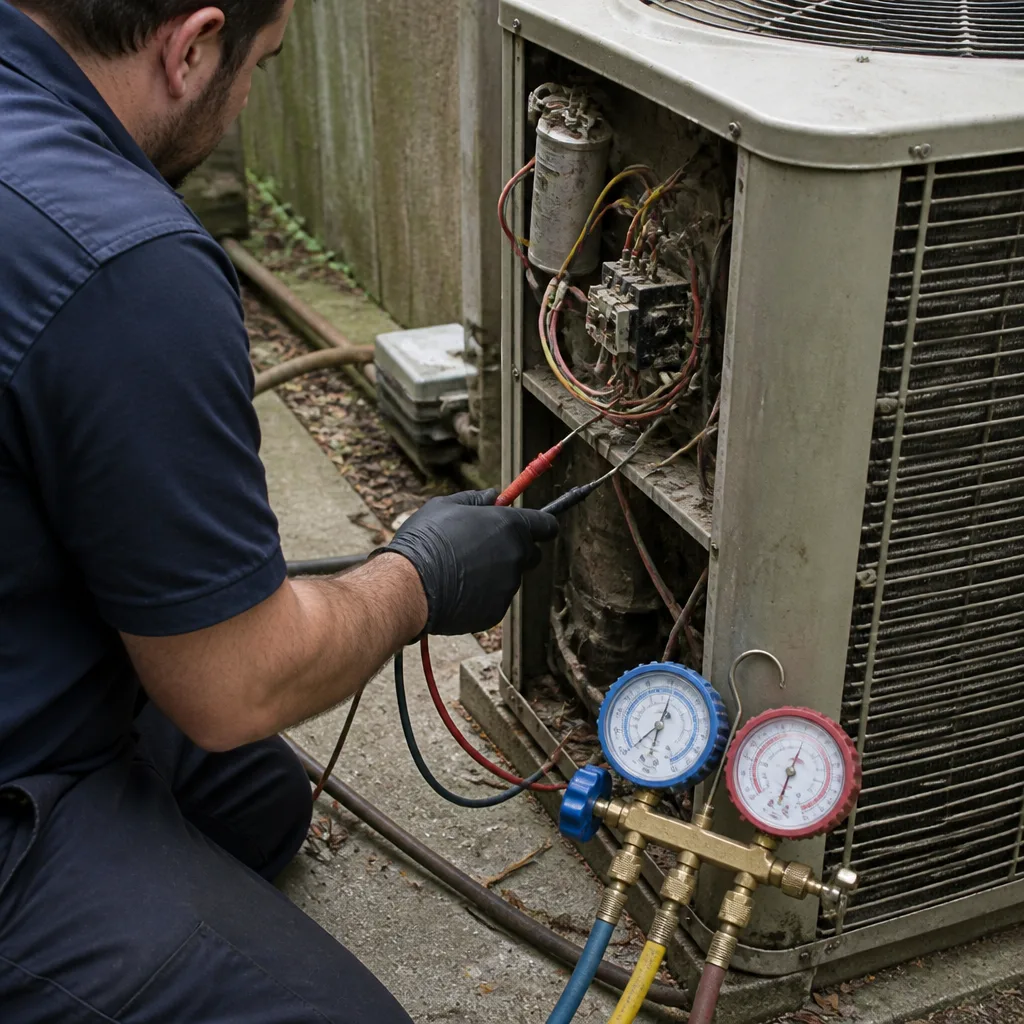 Before
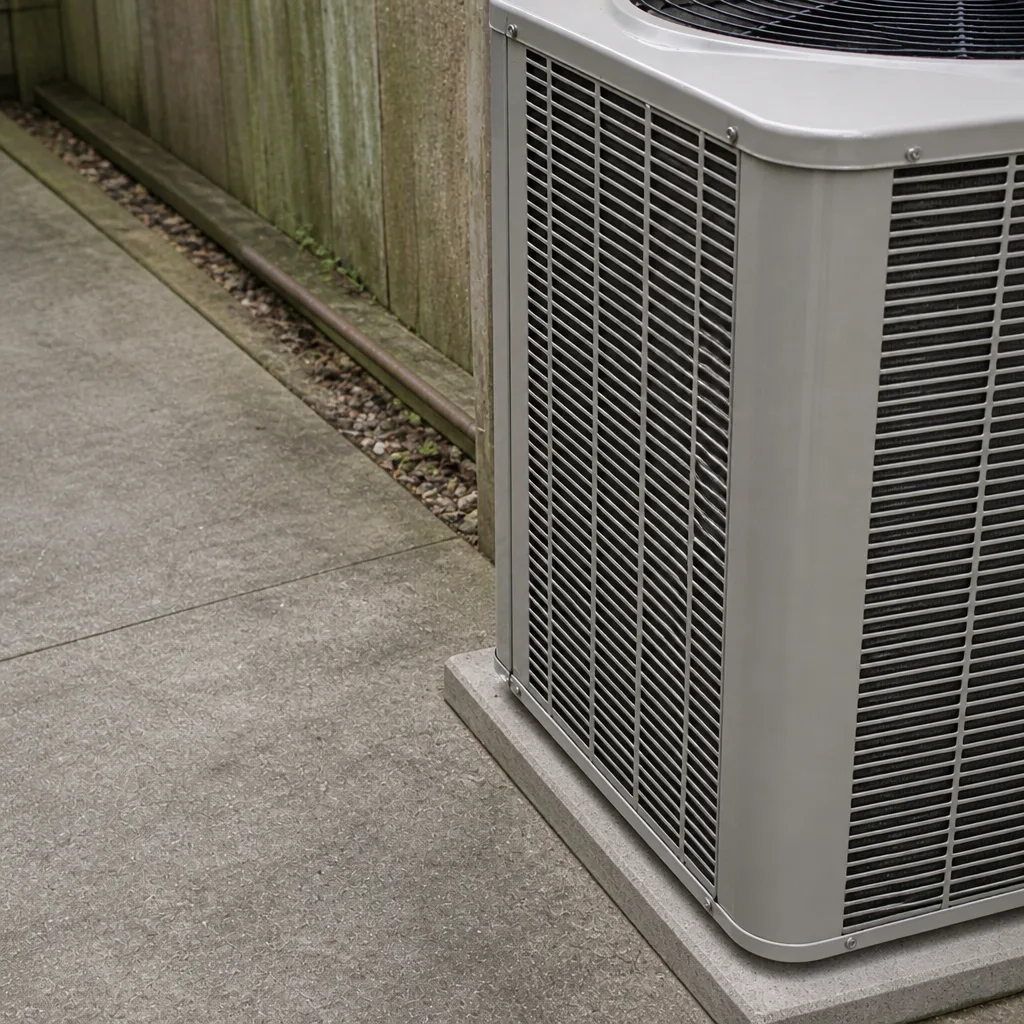 After
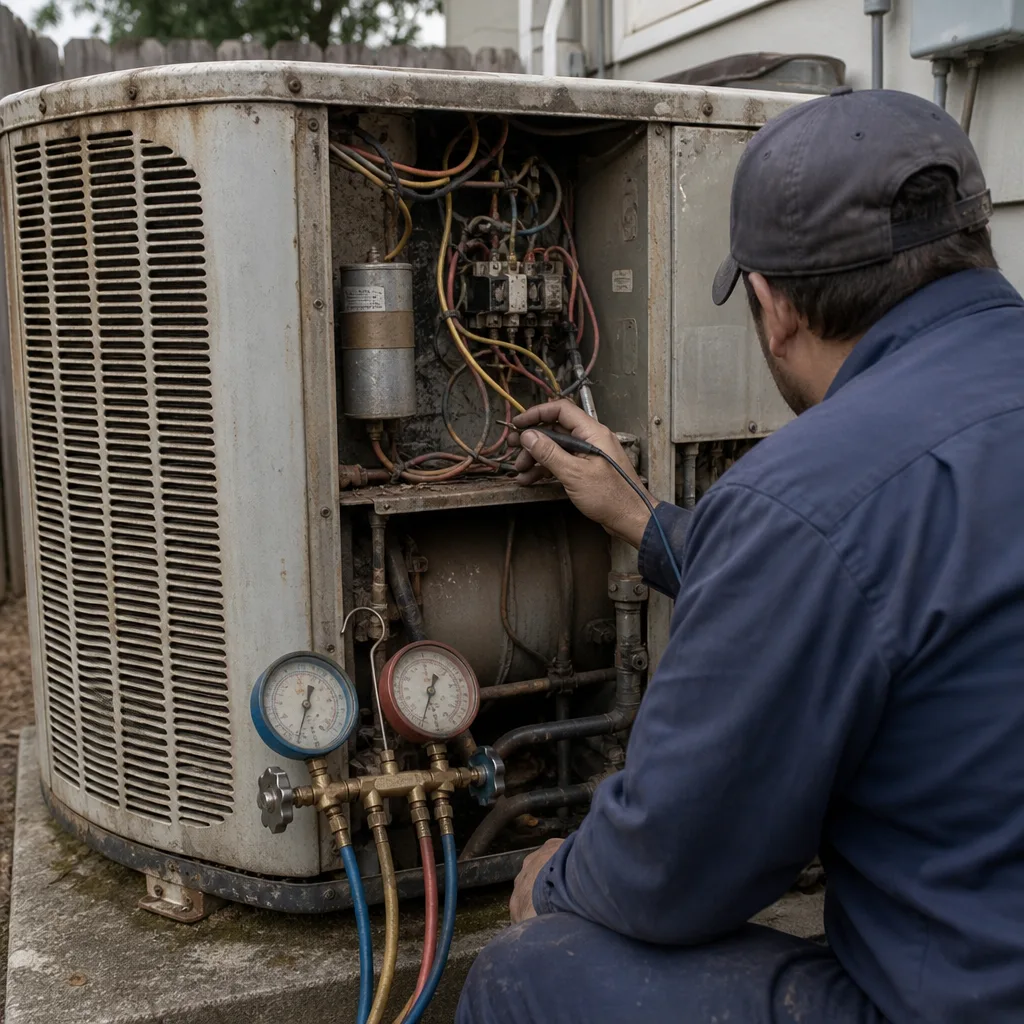 Before
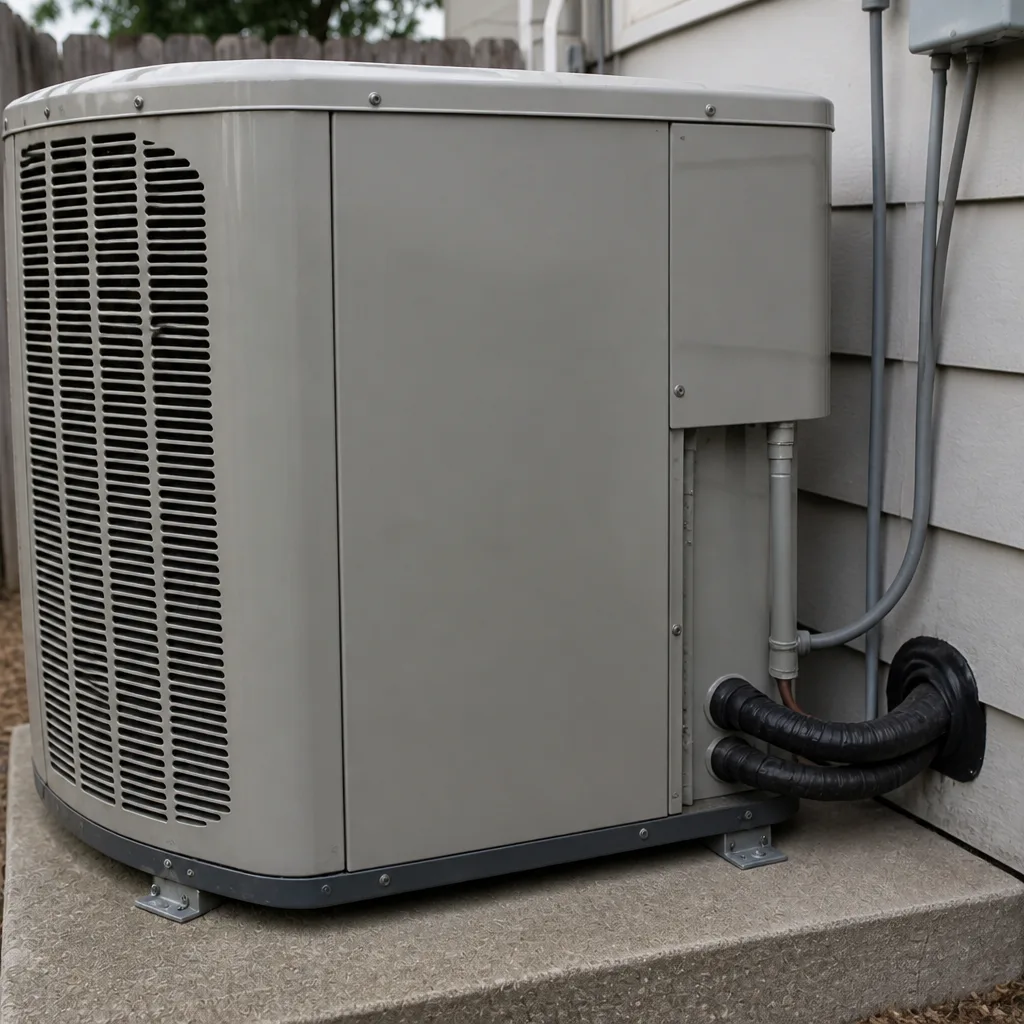 After
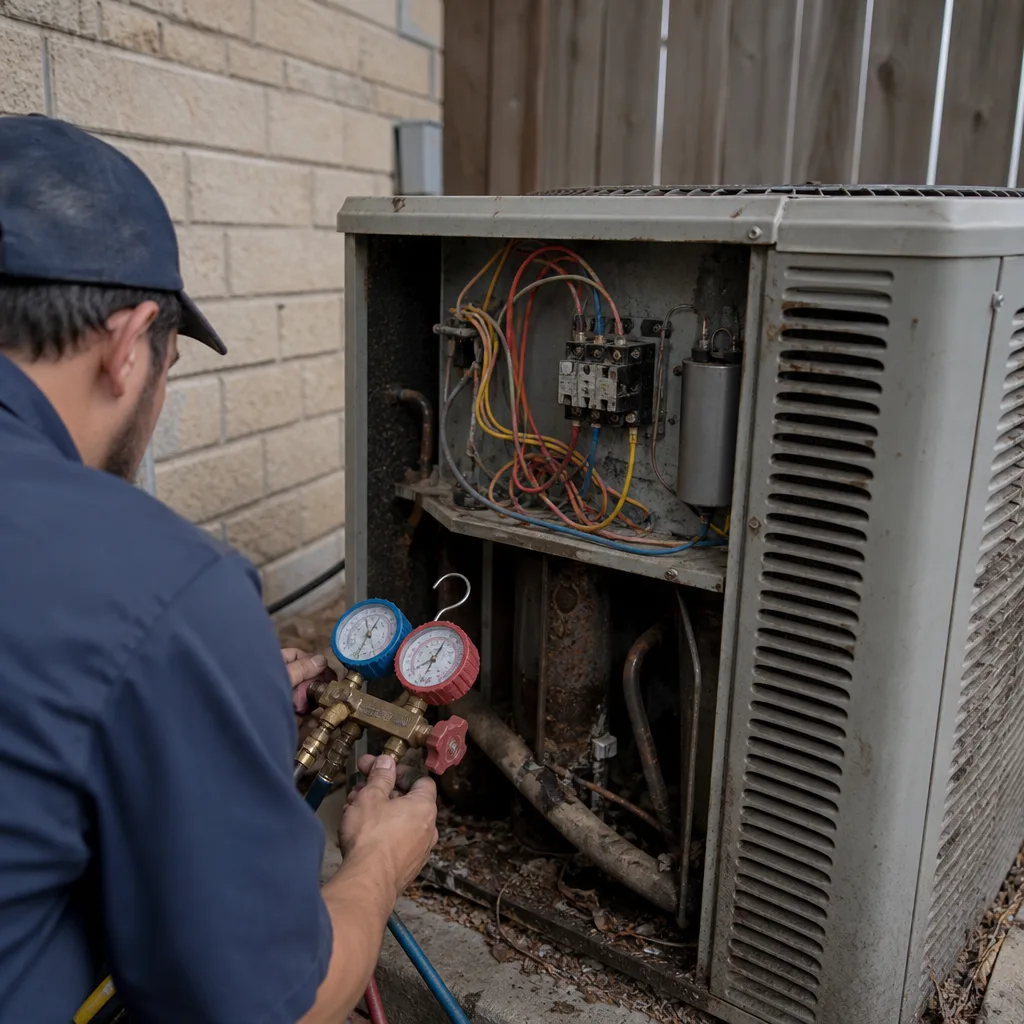 Before
 After
When to Call a Professional
Call a technician for a breaker that trips twice, for an outdoor unit that hums but won’t start, for a system that runs but doesn’t cool, for ice on the indoor coil, or for any smell of gas or sound of a carbon monoxide alarm. Call for a furnace that won’t fire up on a cold night, and for any failure where the home has an elderly or medically fragile resident. Also call if you’ve checked the thermostat, the filter, and the breaker and the system is still down. If you want a straight read on the problem and a written estimate, we can help. Stallion AC Repair offers free estimates in Grand Prairie, and we work on Carrier, Trane, Lennox, Goodman, Rheem, York, Daikin, Bryant, and American Standard equipment. Call (866) 942-9965. We answer 24/7. Fast dispatch from 7am to 7pm, Sunday through Friday.
Frequently Asked Questions
Repair cost depends on the specific failure, and we give a written price before any work starts, so you’ll know the number up front. The final cost is set per job by the written estimate. Rather than quote a number over the phone, we diagnose the actual problem and give you a fixed written price. Call (866) 942-9965 for an exact quote. Estimates are free.
Same-day service is often possible, and calling earlier in the day helps. Demand surges during heat waves, so a confirmed service relationship established before summer gives you priority. Call (866) 942-9965. We answer 24/7. Fast dispatch from 7am to 7pm, Sunday through Friday. A call outside dispatch hours is booked into the next opening.
Check the thermostat setting and mode, then the breaker, then the filter, then the outdoor unit for debris, then any float switch for standing water. About one in five calls resolve without a visit once these are checked. Never open the electrical panel or the outdoor unit. Call us if the basics don’t resolve it.
Roughly 90°F indoors is the threshold where vulnerable residents should leave for a cooled space. If you have elderly, very young, or medically fragile people in the home, don’t wait for symptoms. Relocate to a relative’s home, a library, or a cooling center. Healthy adults should get somewhere cool too once it crosses that line.
It depends on the age and condition of the equipment, and a straight answer beats a sales pitch. If the system is past about 12 to 15 years old and the repair is expensive, replacement usually makes more sense than another repair. If it’s a young unit with a single failed part, repair is the right call. We’ll tell you which one and why. Call (866) 942-9965 for an honest assessment.
A fair quote is written before work starts, explains the diagnosis, and gives you options. Watch for verbal-only prices, a diagnosis you can’t follow, or a push toward full replacement without a clear reason. If it doesn’t add up, get a second opinion and get it in writing. Call (866) 942-9965 for a free estimate.
The Bottom Line
HVAC emergencies in Grand Prairie follow a pattern. Heat waves and aging equipment drive most of them, and the homes that handle a failure well are the ones that prepared before the season. That means a confirmed service relationship, a spare capacitor and filters on hand, a properly sized portable unit and a battery-powered fan, and a clear internal-temperature threshold that tells you when to leave. It also means knowing what to check before you call and what a fair repair quote looks like. Set those pieces up in spring and a failure becomes a wait for repair instead of a crisis. Our technicians have up to 12 years of experience and work on Carrier, Trane, Lennox, Goodman, Rheem, York, Daikin, Bryant, and American Standard equipment. Repair or replace, we’ll give you a straight answer.
When a problem does show up, call (866) 942-9965 for a free estimate. We answer 24/7, and fast dispatch runs 7am to 7pm, Sunday through Friday. Get your system looked at before the next heat wave, and you’ll be in a much better position than the caller who waited.
Written by the team at Stallion AC Repair.