
Last updated November 16, 2026
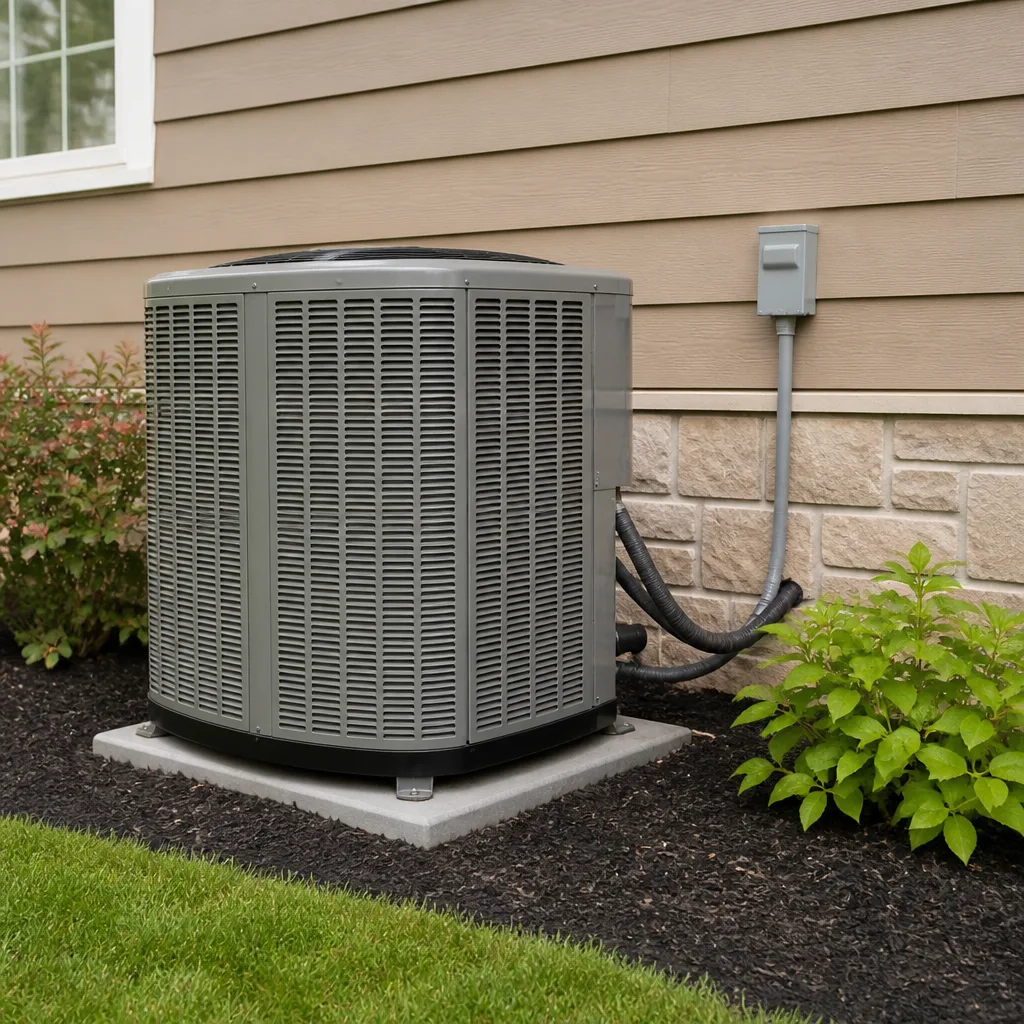 AC repair
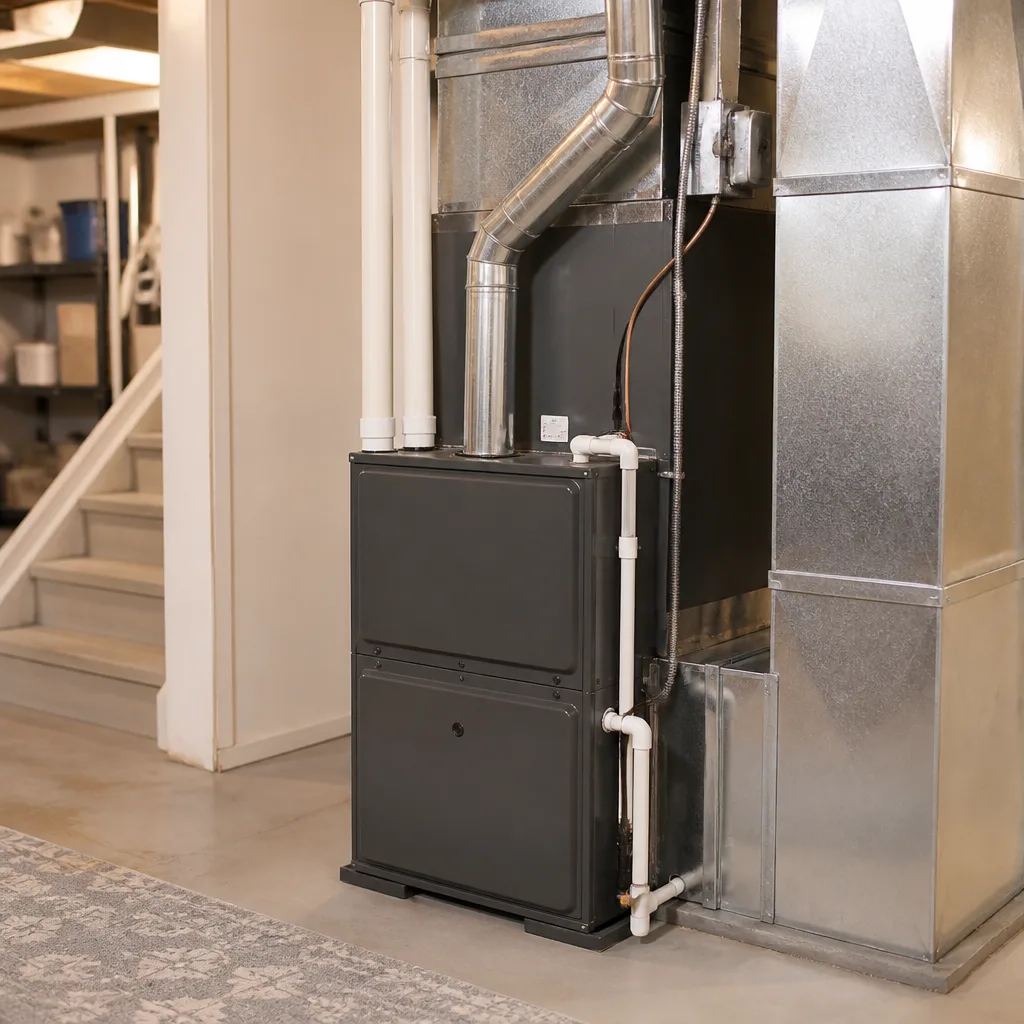 Furnace & heating
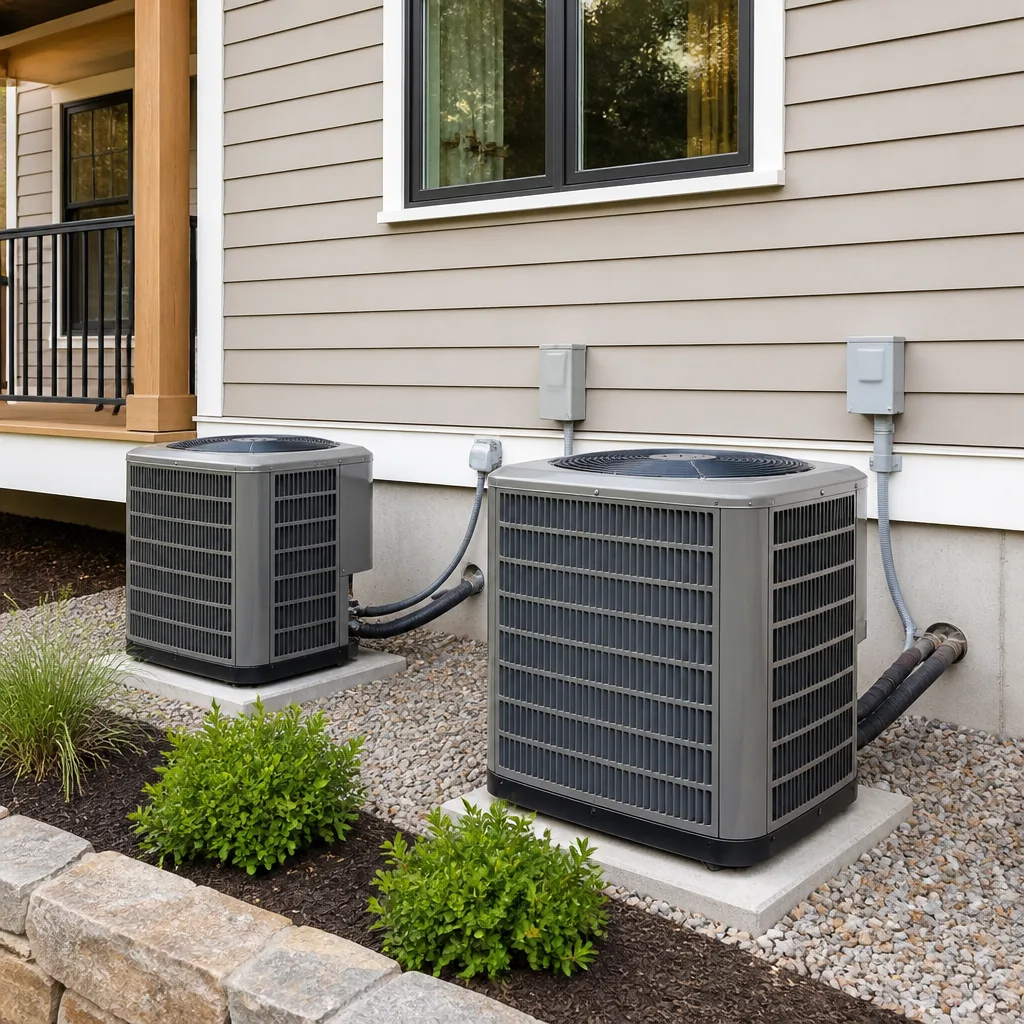 Heat pumps
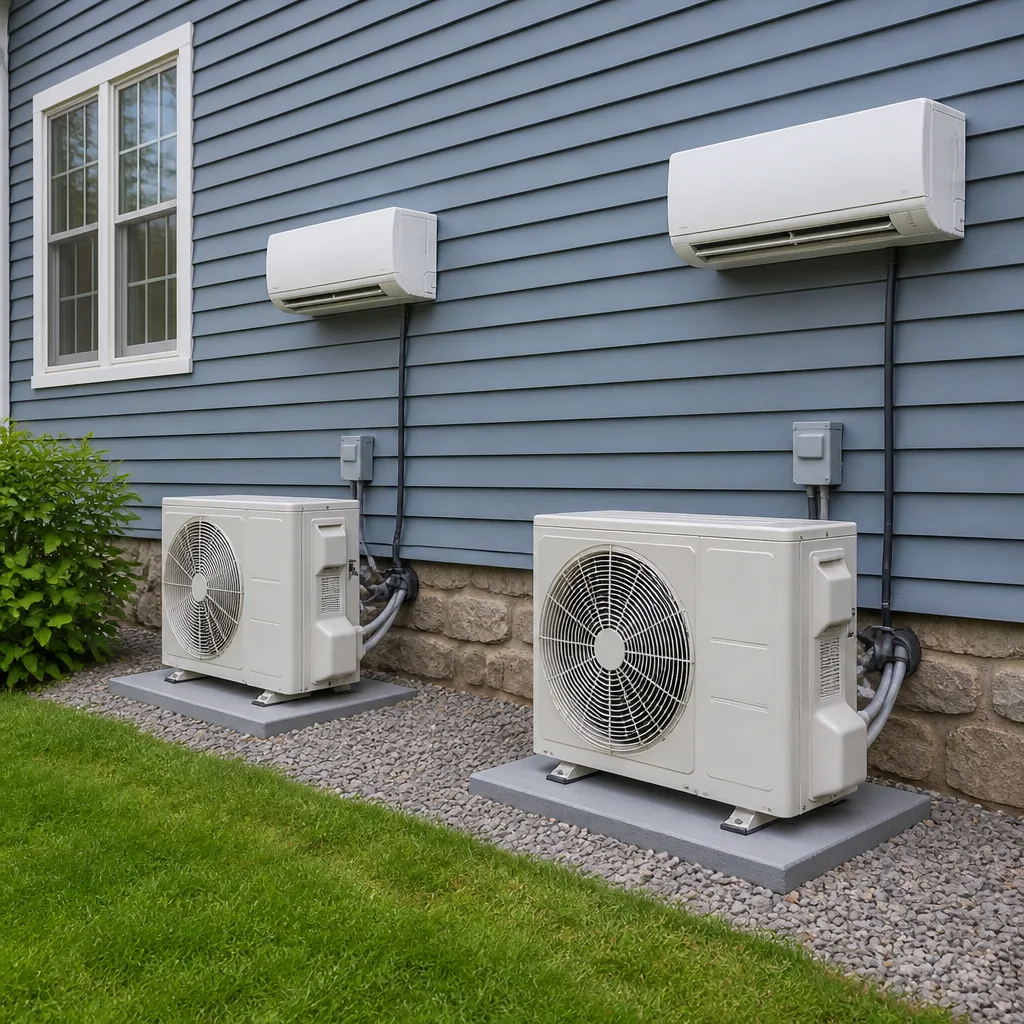 Ductless mini splits
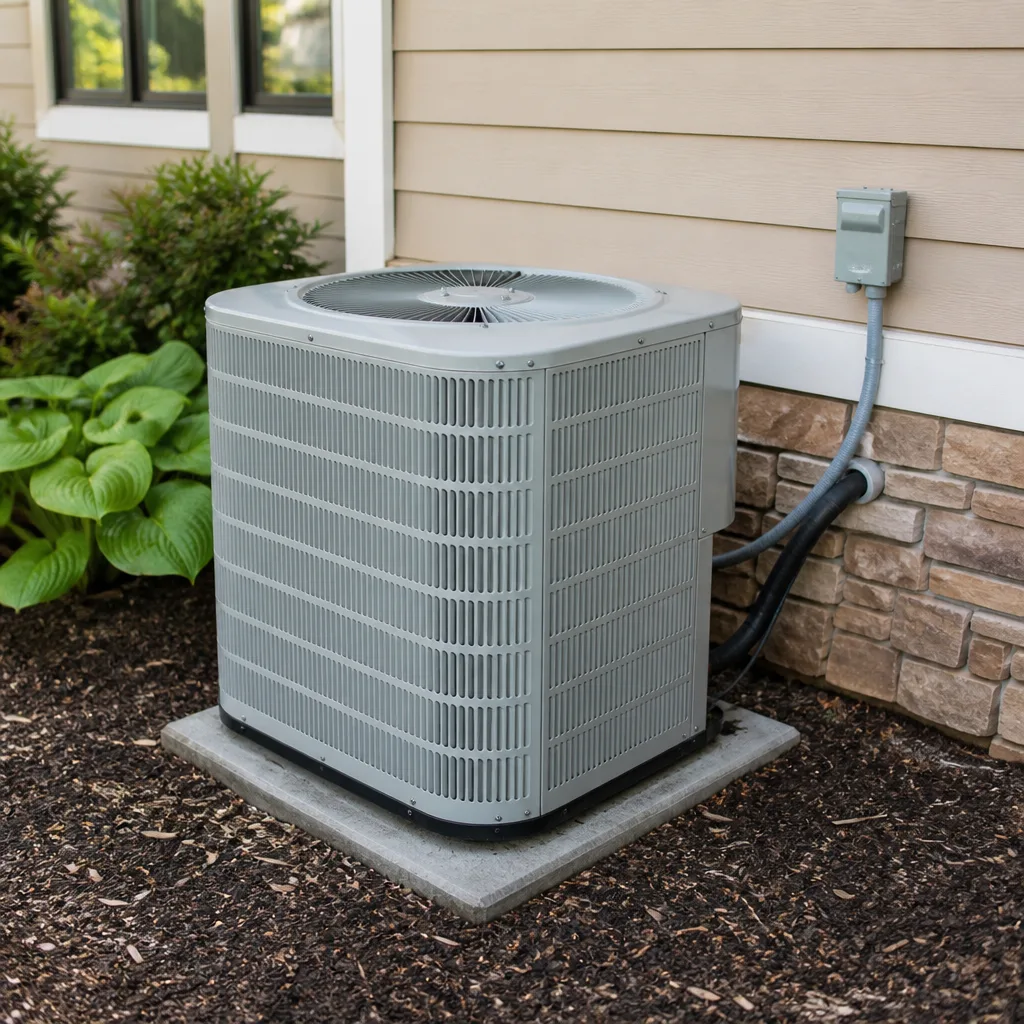 Carrier
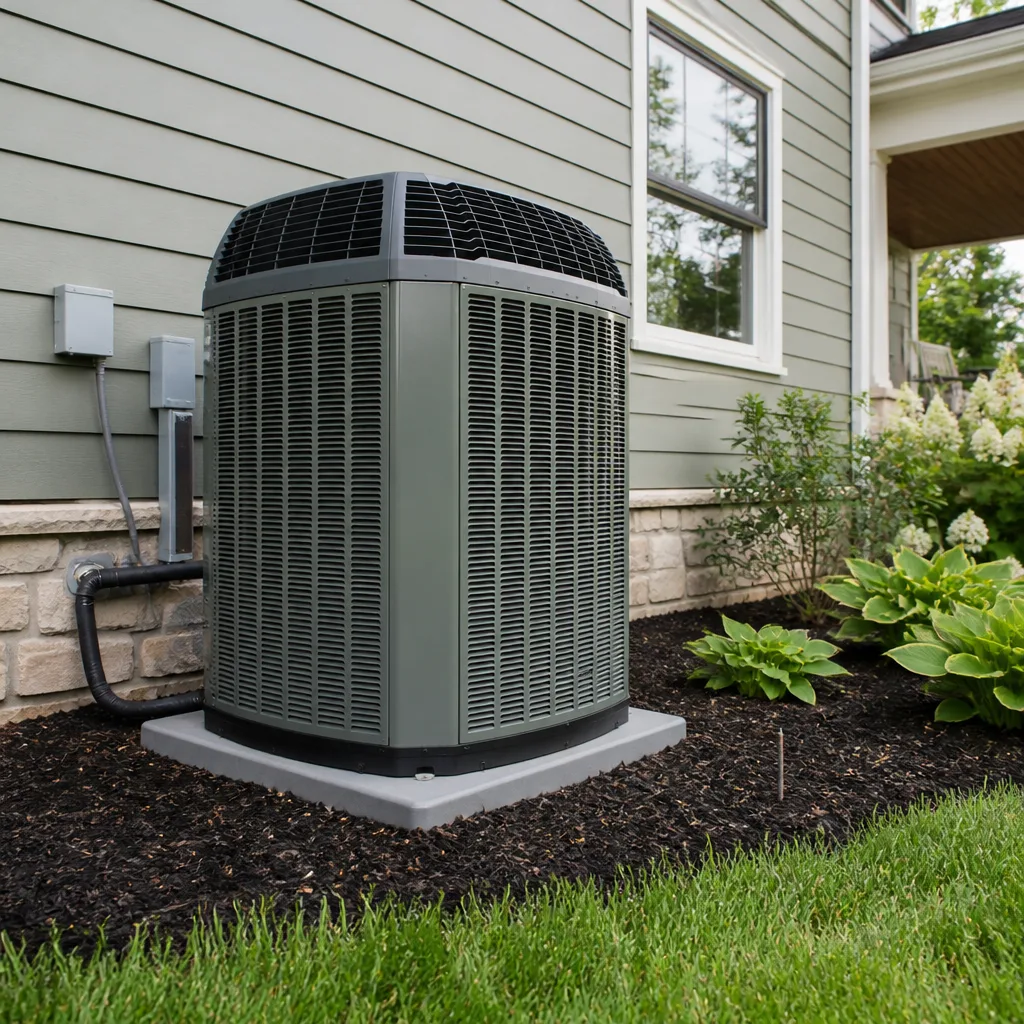 Trane
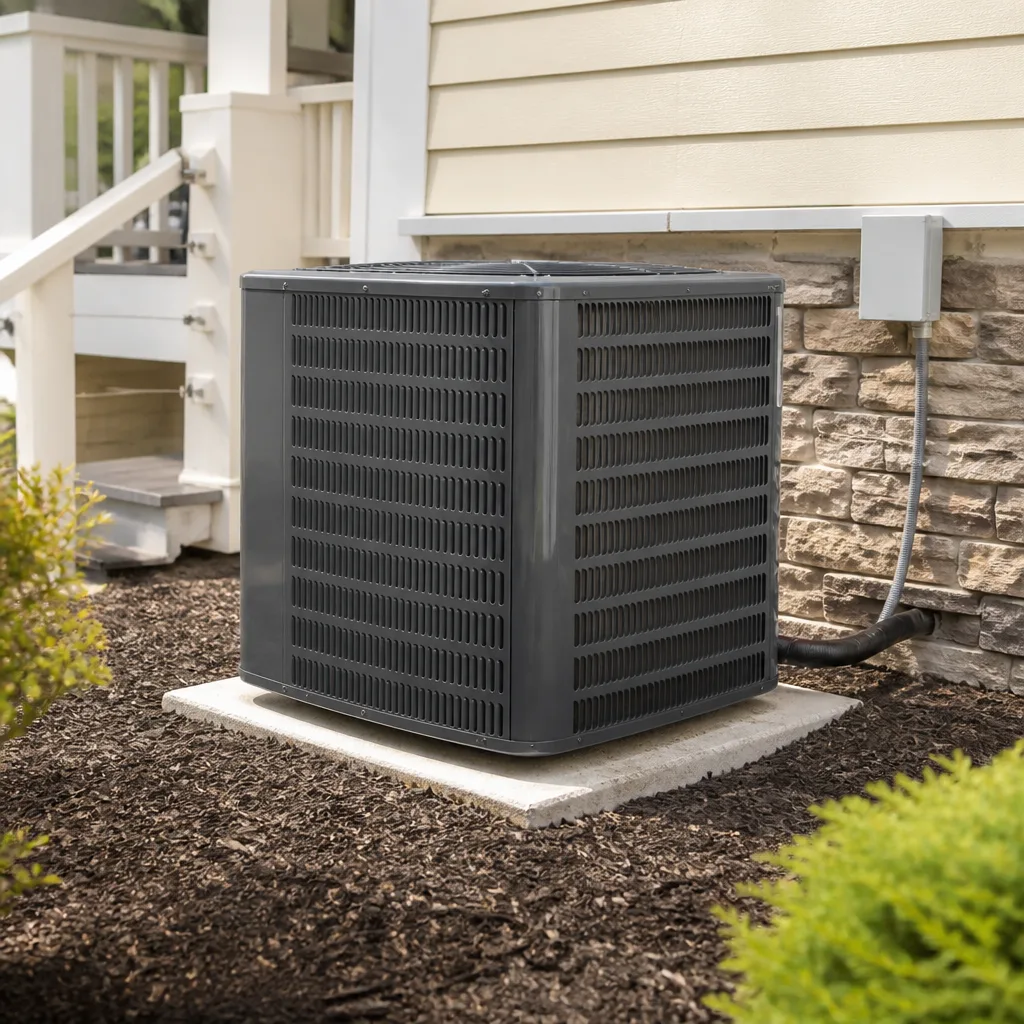 Goodman
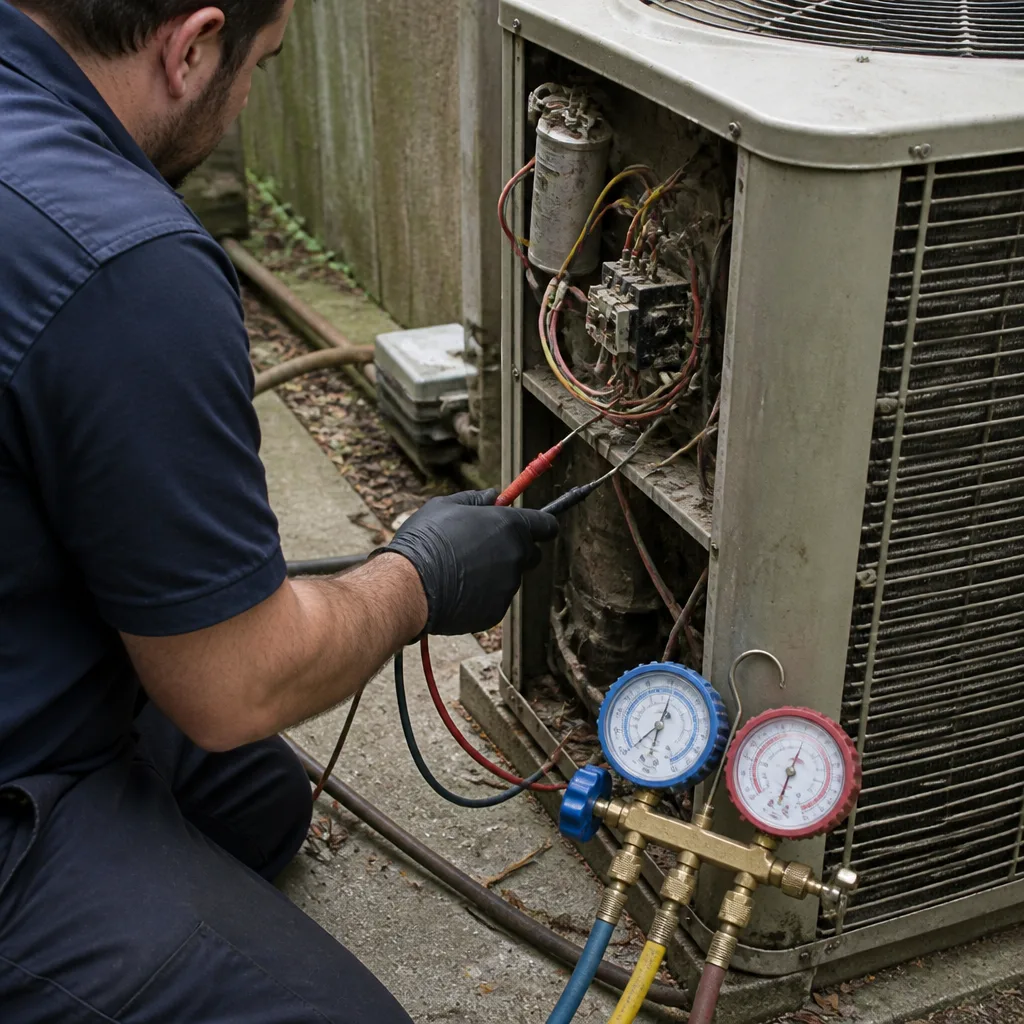
Seasonal tune-up and full diagnostic on your Carrier, Trane, or Goodman system - readings shown to you before any repair is proposed
Diagnosis first, numbers second - you approve the repair price before a single part goes in.
Get your free estimateHVAC Cost Breakdown: The Grand Prairie Homeowner’s Reference for 2026
The cheapest AC quote you get in Grand Prairie this year may be for a unit that can’t be legally sold in Texas eighteen months from now. Contractors clearing old R-410A inventory are offering prices that look like deals but create a refrigerant dead-end, and the equipment still works, so nothing warns you at the point of sale. Three forces are shaping HVAC pricing here in 2026: the SEER2 equipment transition, the refrigerant changeover, and labor costs that have finally settled after years of disruption. This guide shows you what installed systems actually cost in Grand Prairie, what drives those numbers, and how to tell a real deal from a clearance trap.
Quick Answer
In Grand Prairie in 2026, a complete AC installation typically runs about $5,200 to $9,800 for single-stage equipment, $7,400 to $13,200 for two-stage, and $11,000 to $18,500 for variable-speed systems, with furnace replacement adding roughly $3,200 to $7,500 depending on size and efficiency tier. Repair costs usually land between $180 and $1,400 depending on the failed component. The written estimate sets the final price, and rebates and tax credits can bring the installed number down noticeably when you plan the job in the off-season.
Styles & brands we work with
- AC repair
- Furnace & heating
- Heat pumps
- Ductless mini splits
- Carrier
- Trane
- Goodman
Table of Contents
- What HVAC Systems Cost in Grand Prairie in 2026
- What the SEER2 Transition Added to Equipment Costs
- The R-410A Dead-End: Why Some Cheap Quotes Cost More Later
- Labor Cost Drivers in the DFW Market
- Stacking Oncor Rebates and Federal Tax Credits in 2026
- Repair or Replace? A Framework With Real Dollar Thresholds
- How Off-Season Planning Saves You Money
- Choosing a Contractor in Grand Prairie
What HVAC Systems Cost in Grand Prairie in 2026
Installed prices in Grand Prairie vary by system type more than by brand name, and understanding that split helps you compare quotes fairly. A single-stage system runs at one speed and costs the least upfront. A two-stage system runs mostly at a lower speed with a higher second stage for extreme heat. A variable-speed system modulates continuously and costs the most, but delivers the steadiest temperatures in a Grand Prairie summer where the equipment runs long hours from May through September.
Here’s how the ranges typically break down for a full AC installation in Grand Prairie, including equipment, labor, and standard commissioning:
- Single-stage AC, complete install: about $5,200 to $9,800
- Two-stage AC, complete install: about $7,400 to $13,200
- Variable-speed AC, complete install: about $11,000 to $18,500
- Furnace replacement, standard efficiency: about $3,200 to $5,400
- Furnace replacement, high efficiency: about $4,600 to $7,500
- Common repair calls: about $180 to $1,400, depending on the component
Those margin spreads are real. Equipment cost is the biggest variable, but the same system can land at different total prices depending on line-set condition, electrical work, and whether the contractor is doing a proper load calculation. A quote that skips the load calculation is guessing, and you’ll pay for that guess in oversized equipment that short-cycles and wears out early.
We work on York, Daikin, Bryant, and American Standard, along with five other leading brands, so we know how each system’s design affects the installed number before we walk in the door. For a full picture of what a AC installation involves in this city, the equipment tier is only the starting point.
What the SEER2 Transition Added to Equipment Costs
The SEER2 efficiency standard, which took effect in 2023, raised the minimum efficiency rating for new equipment sold in the United States, and the ripple has reached 2026 pricing. What it means in plain terms: new equipment must be measurably more efficient, and more efficient equipment generally costs more to build. Manufacturers redesigned components to hit the new thresholds, and those costs landed in the wholesale price.
What did that add to a typical Grand Prairie install? Industry-wide, the transition added somewhere in the range of a few hundred dollars to the equipment side of a quote, with the largest increases hitting the entry-level single-stage tier where the efficiency gap was widest. That’s not a dramatic jump per unit, but it changes the calculus on how long you keep an aging system running.
What you should expect to recover is more important than what you pay upfront. A SEER2-compliant system running through a Grand Prairie cooling season will use less electricity than the unit it replaces. Over a 10-year horizon, that utility savings can offset a meaningful portion of the equipment premium, especially if you’re replacing a unit that’s been limping along near the end of its life. The exact recovery depends on your home’s insulation, duct condition, and thermostat habits, but the direction is reliable: the gap between old equipment efficiency and current standards has widened, so replacement math favors running new equipment longer.
That’s also why comparing quotes on sticker price alone is a mistake. A quote for a system that meets current standards isn’t apples to apples with a quote for clearance equipment built to older ones. The Stallion AC Repair approach is to show you both the equipment cost and the projected efficiency difference, so the number you’re comparing is the real total.
The R-410A Dead-End: Why Some Cheap Quotes Cost More Later
The refrigerant changeover is the single most important thing to understand before you sign anything in 2026. The industry has moved from R-410A toward newer refrigerants with lower global warming potential, and equipment designed for the new refrigerants is now the forward-looking standard. Equipment built for R-410A still works, still cools, and can still be sold and installed. But every year that passes makes R-410A more of a maintenance question mark as the supply of that refrigerant narrows.
Here’s the trap. A distributor sitting on R-410A equipment has an incentive to move it, and that incentive shows up as a contractor quote that undercuts the market. The unit is real. The install is real. But you’ve bought into a refrigerant supply chain that’s shrinking, which can mean higher costs when the system eventually needs refrigerant and fewer options if the equipment is later repaired or replaced.
How to spot it:
- Ask what refrigerant the proposed equipment uses. If the answer is R-410A, ask why it was chosen over current-standard equipment.
- Ask for the model number before you sign. A model number tells you the year of manufacture and the refrigerant.
- Compare the quote against the market range for that system type. A price far below the low end of the range deserves a question.
- Ask whether the equipment will meet current efficiency standards if it needs future repair or warranty work.
None of this means every R-410A system is a bad purchase. A deep discount on a value-tier brand like Goodman can make sense in some situations. What matters is that you know what you’re buying and why. We’ll tell you when a clearance unit is worth it and when it isn’t. Our role is to give you a straight answer about the furnace repair or AC decision in front of you, not to push the higher-ticket option by default.
Labor Cost Drivers in the DFW Market
Labor costs in the DFW metroplex look different from most of the country, and the biggest single driver is summer. When temperatures climb and humidity sits in the 90s for weeks, AC repair demand spikes hard. Contractors face more calls than they can handle, and the price to get a technician out in the middle of a July heat wave reflects that squeeze. A repair that would sit at the low end of the range in April can land notably higher during a peak-season emergency.
What drives the labor number up or down:
- Season: Peak-season emergency calls in Grand Prairie command a premium over off-season scheduled work. The work isn’t different; the demand is.
- Access and logistics: Attic units, tight closets, and long line-set runs take longer than a straight closet swap. A two-story home with a second-floor attic air handler can add meaningful labor hours.
- Scope: Replacing a system with existing, aging ductwork may require adaptation work. A straight replacement of like-for-like equipment is the cheapest install scenario.
- Electrical and code requirements: Most cities require a permit for a system replacement, and the inspection timeline and permit cost factor into the labor side. Grand Prairie is no exception; your contractor should build the permit into the quote.
- Labor normalization: After the disruption of recent years, labor rates have settled, which is good news for homeowners who plan ahead. The premium for urgency has come back down, but the premium for peak-season emergency work hasn’t gone away.
The way to avoid paying the summer premium is simple: schedule the repair or replacement during the off-season. Fall and spring are the shoulder seasons in Grand Prairie, when the demand eases and contractors can fit scheduled work in more efficiently. If your system is showing signs of trouble, addressing it in February beats a July emergency every time.
Stacking Oncor Rebates and Federal Tax Credits in 2026
Grand Prairie sits in the Oncor Electric Delivery service territory, and Oncor offers rebate programs for efficiency upgrades that can offset a meaningful chunk of system replacement cost. Those rebates can be stacked with federal tax credits for high-efficiency equipment, and the stacking is where homeowners leave money on the table. The paperwork is manageable if you do it in the right order.
Here’s the sequence that prevents lost savings:
- Confirm eligibility before buying. Oncor rebate amounts depend on system efficiency rating, system type, and current program rules. Confirm the proposed equipment qualifies before you sign.
- Check the federal side. Federal tax credits for qualifying high-efficiency systems are available, but the credit amount and qualifying thresholds are set annually. Ask your contractor for the current qualifying rating before you commit to an equipment tier.
- Keep your documentation. You’ll need model numbers, invoices, and proof of installation at the address. File these the day the installer finishes.
- Submit rebates promptly. Rebate programs have submission windows, and a late application can mean a lost rebate. Ask who handles the submission and get a timeline.
- Coordinate the credit with your tax filing. Federal credits are claimed at tax time, not at the point of sale, so keep the receipts where you’ll find them next April.
The specific rebate amounts and tax credit figures change annually and depend on your system, so confirm the current numbers before you buy. What matters is that the plan is built before the equipment is delivered, not after. We can walk you through how the equipment side of the quote stacks up against the current rebate requirements for your home in Grand Prairie. Call (866) 942-9965 for a free estimate. We answer 24/7. Fast dispatch from 7am to 7pm, Sunday through Friday.
Repair or Replace? A Framework With Real Dollar Thresholds
Repair versus replace is the question that drives most of the cost anxiety in Grand Prairie HVAC. The honest answer is arithmetic, not a gut feeling. Here’s the framework we use, and it holds up for most homes.
The 50% rule. If a single repair quote equals or exceeds 50% of what a new system would cost, and the equipment is past the midpoint of its expected service life, replacement is usually the better financial move. A $2,800 compressor replacement on a 14-year-old system is not a good bet.
The repair history test. If you’ve spent more than about a third of a new system’s cost on repairs in the last two years, you’re subsidizing an asset that’s about to stop earning. Two or more significant repairs in a single cooling season is a strong signal.
The age threshold. Most central AC systems in Grand Prairie run 12 to 15 years before efficiency loss and repair frequency make replacement the sensible call. Furnaces often go 15 to 20 years. If your equipment is past those bands and drawing repeated repair calls, replacement math changes.
The efficiency gap. A system built before the SEER2 transition is running at a lower efficiency standard than anything you can buy today. That gap shows up every month in the electric bill. If the unit needs a major repair at the same time, the replacement case gets stronger.
When the numbers are close, that’s when a call is worth making. A technician who knows your brand can tell you whether the system has more life in it or whether you’re one more repair away from a bad decision. We’ll tell you which side of the line we think you’re on. Call (866) 942-9965 for a free estimate and a straight answer on your system.
How Off-Season Planning Saves You Money
Grand Prairie’s cooling season is long, but the calendar still has a shoulder season, and the shoulder is where the savings live. Comfort systems in DFW run hard from May into September, and that’s exactly when demand for HVAC work peaks. The same replacement that gets quoted at the high end of the range in July is typically quoted closer to the middle in March or October.
What off-season planning gets you:
- Firm, unhurried quotes. A contractor who isn’t juggling heat-wave emergencies can spend the time on a proper load calculation and a complete written estimate.
- Scheduled install dates. System replacement is planned work, not emergency work. It gets load-calculated, ordered, and scheduled, which means the timeline is predictable.
- A better shot at rebate paperwork. With fewer jobs in motion, the rebate submission doesn’t get lost in the shuffle.
- Time to think. You can compare equipment options and ask the questions that always get skipped when the house is at 88 degrees.
The trap is waiting until the system fails. When a compressor or a blower motor dies in July, you’re choosing from whatever the emergency timeline allows, and the pressure pushes the decision toward speed over substance. Planning the replacement during the shoulder season puts the choice back in your hands. If your system is ten years or older, or if a repair quote has already pushed past the 50% mark, this is the year to be proactive.
Choosing a Contractor in Grand Prairie
The contractor matters as much as the equipment. A generalist who guesses at a brand-specific repair can cost you more than the repair is worth, which is why we train specifically on the brands we service. We work on Carrier, Trane, Lennox, Goodman, Rheem, York, Daikin, Bryant, and American Standard, and we know the failure patterns, the part availability, and the repair-or-replace math for each one before we arrive.
What to look for when you compare contractors in Grand Prairie:
- Brand-specific knowledge. Ask whether the contractor services your brand specifically or works on anything.
- A written estimate. Not a verbal number. The written estimate is what sets the final price, so get it in writing.
- A load calculation on replacements. A contractor who sizes equipment without one is guessing.
- Permit awareness. Most cities, including Grand Prairie, require a permit for a system replacement. Ask who pulls it.
- Straight repair-or-replace advice. If the conversation feels like a sales pitch, it is one. Look for someone who’ll tell you when repair is the right call.
- Heating and cooling service from one contractor. One company for both seasons means one accountability line when something goes wrong.
We’ve seen how quickly a Grand Prairie summer can push a marginal system over the edge, and we’ve seen how much a homeowner can save by making a plan instead of waiting for a failure. Our technicians have up to 12 years of experience across the full equipment lifecycle, from brand-new installation through mid-life repair to end-of-life replacement. That matters when the advice is supposed to be honest. For more on what we do in this city, see our Grand Prairie page.
Common Mistakes to Avoid
- Buying on sticker price alone. A quote that doesn’t state the equipment model number or the refrigerant used leaves you comparing numbers that don’t mean the same thing.
- Accepting a price that skips the load calculation. Oversized equipment short-cycles, wears out faster, and doesn’t feel comfortable in a Grand Prairie summer, even though it cools.
- Stacking rebates after the fact. Some rebate programs require pre-approval or specific equipment, so confirming eligibility after the install can cost you the rebate.
- Waiting for a failure to plan a replacement. An emergency replacement in July costs more than a planned one in March, and you lose the ability to compare quotes properly.
- Ignoring the refrigerant question. A cheap quote can hide an R-410A dead-end that will cost you more when the system eventually needs refrigerant or replacement.
- Leaving the permit out of the quote. Ask who pulls the permit and whose name is on it. An unpermitted replacement can complicate resale and insurance.
- Taking the first repair quote as gospel. The 50% rule needs a new-system number to compare against, so get that number before you decide to repair.
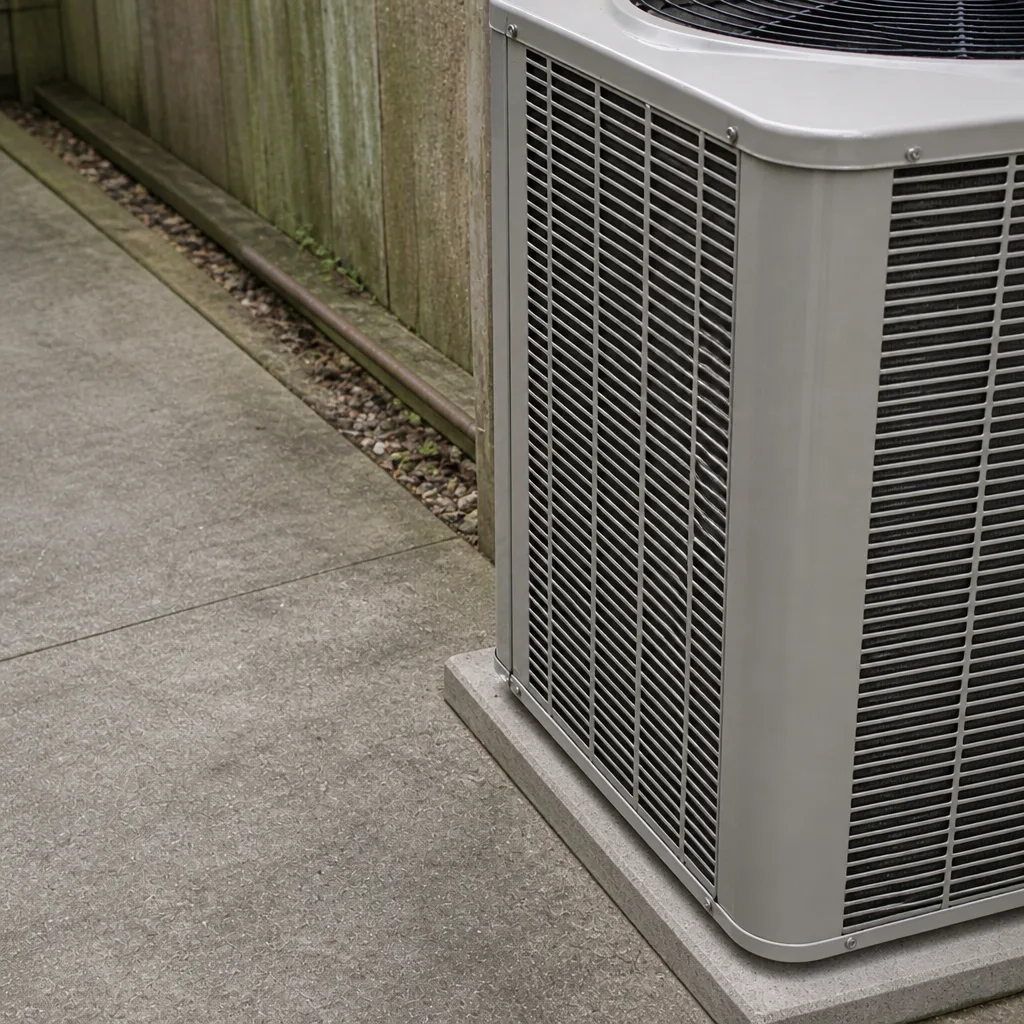
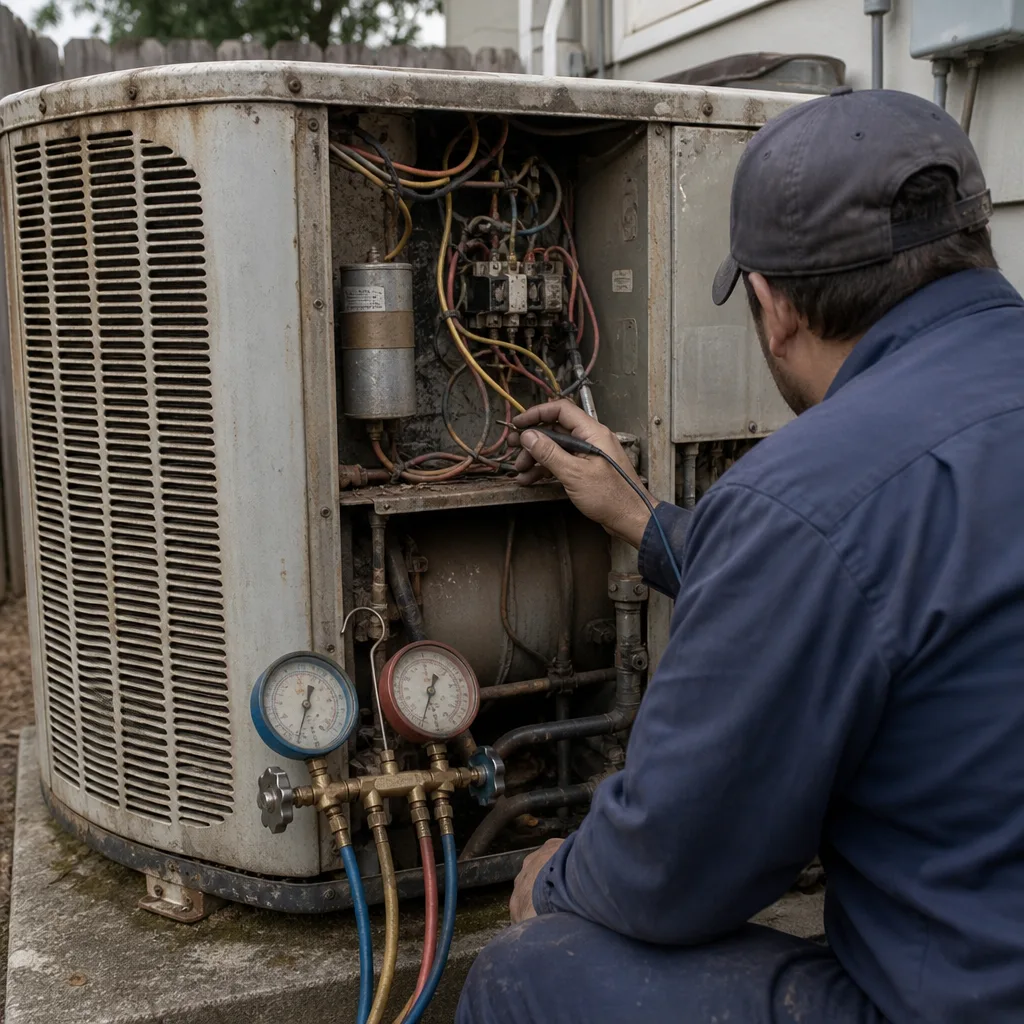
See the difference
 Before
 After
 Before
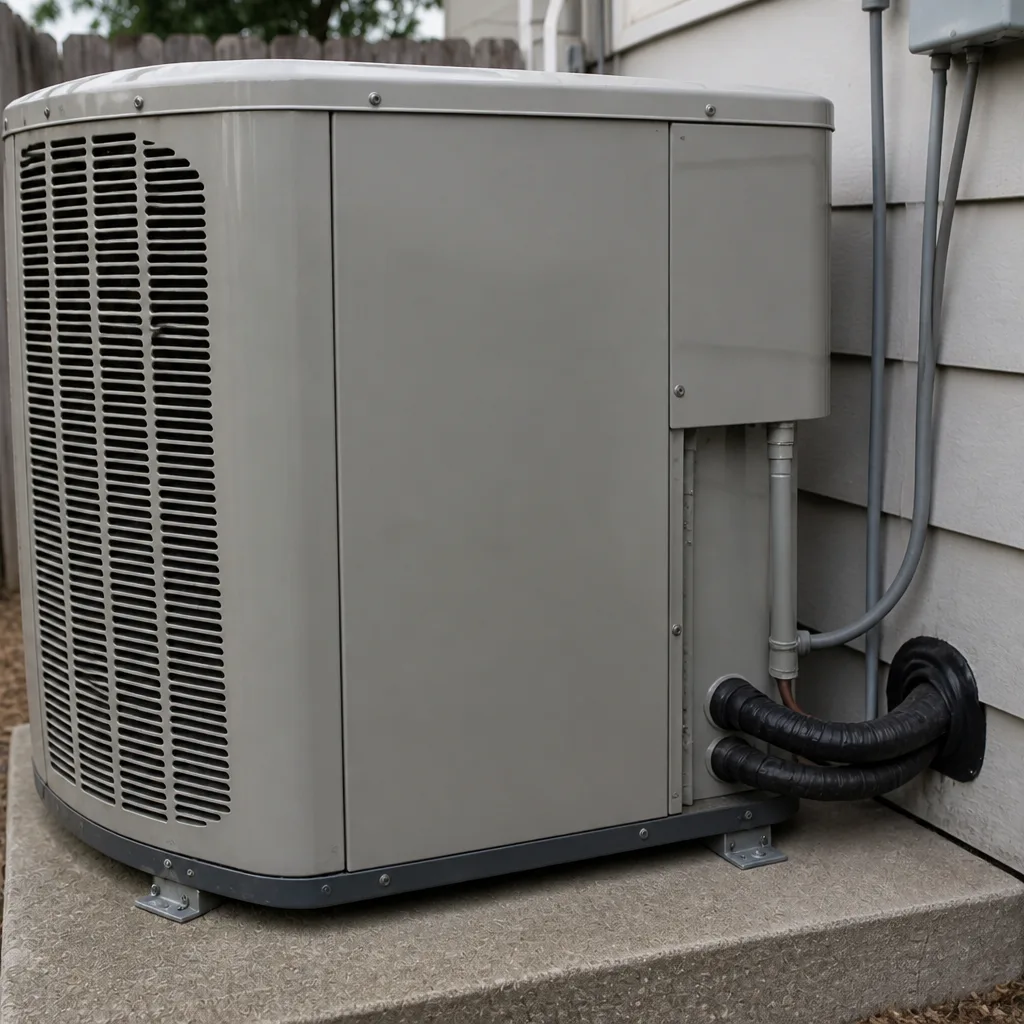 After
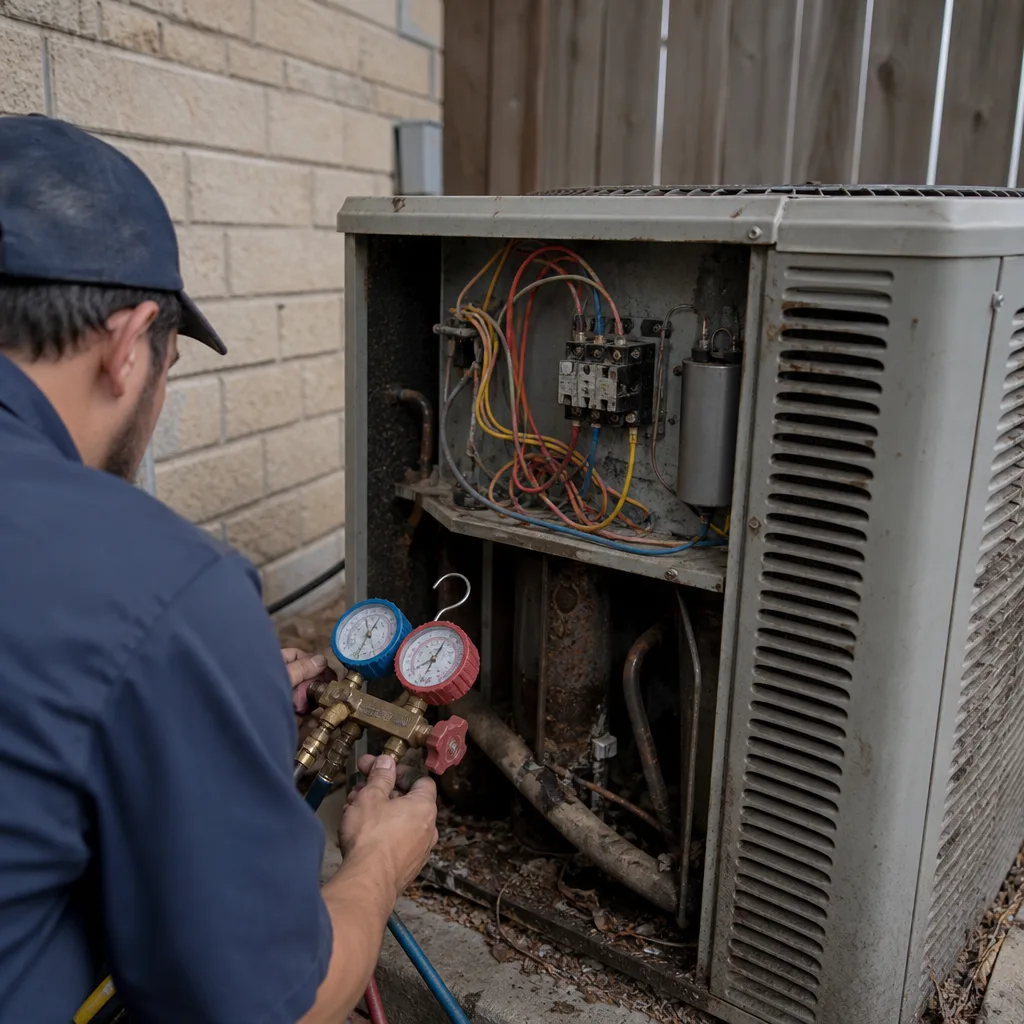 Before
 After
When to Call a Professional
Some HVAC decisions are fine to sit with. Others aren’t, and knowing the difference protects both your budget and your home. Call a professional when the system won’t cool or heat at all, when you hear grinding, banging, or repeated short cycling, when a breaker trips more than once, or when the unit struggles to reach your set temperature. Call also when the system has run past 12 years and a repair quote is heading toward the 50% mark. If you’ve had two or more significant repairs in the last two cooling seasons, that’s a planning conversation, not a repair conversation. Stallion AC Repair offers free estimates in Grand Prairie, and we’ll tell you when repair is the right call and when replacement is. Call (866) 942-9965. We answer 24/7. Fast dispatch from 7am to 7pm, Sunday through Friday.
Frequently Asked Questions
A complete AC installation in Grand Prairie typically ranges from about $5,200 for single-stage equipment to $18,500 for variable-speed systems, with furnace replacement adding roughly $3,200 to $7,500. The exact number depends on system type, efficiency tier, and your home’s ductwork and electrical condition. The written estimate sets the final price. Call (866) 942-9965 for a free estimate.
Same-day service is often possible for repair calls in Grand Prairie, especially when you call before the afternoon traffic picks up. Call (866) 942-9965 to get on the schedule. We answer 24/7. Fast dispatch from 7am to 7pm, Sunday through Friday.
Yes. Oncor rebates and federal tax credits are available for qualifying high-efficiency systems, and they can usually be stacked if the equipment meets both programs’ requirements. Confirm eligibility before you sign, because some programs require specific equipment or pre-approval. Call (866) 942-9965 for a free estimate and we’ll walk you through the current requirements.
The quick framework: if a single repair quote is 50% or more of a new system’s cost and the equipment is past its midpoint in age, replace it. If you’ve spent more than a third of a new system’s price on repairs in the last two years, that’s another signal. Get a written new-system quote to compare against before you decide. Call (866) 942-9965 for a free repair-or-replace assessment.
Not automatically, but you need to know what you’re buying. R-410A equipment is still legal to sell and install, but the refrigerant supply is narrowing, which can mean higher costs later if the system needs refrigerant. Ask for the model number and the refrigerant before you sign. If the price is far below the market range, ask why. Call (866) 942-9965 for an honest read on whether a clearance quote is worth it.
Demand peaks when temperatures spike, and contractors can only handle so many calls at once. A repair that would be scheduled at the low end of the range in spring can land higher during a July emergency. The fix is to plan ahead: schedule repairs and replacements during the shoulder seasons, before the peak. Call (866) 942-9965 for a free estimate.
The Bottom Line
HVAC pricing in Grand Prairie in 2026 comes down to three forces: the SEER2 efficiency standard that reshaped equipment costs, the refrigerant changeover that makes some cheap quotes a hidden expense, and labor costs that reward planning and punish emergencies. The installed ranges in this guide give you a baseline, but the written estimate is what sets the final price. Slow down on cheap quotes that don’t state the model or refrigerant, confirm rebate eligibility before you buy, and use the 50% rule to take the emotion out of repair or replace. The homeowners who get this right are the ones who plan in the shoulder season instead of waiting for a July failure. We’ll give you a straight answer on your system. Call (866) 942-9965. We answer 24/7. Fast dispatch from 7am to 7pm, Sunday through Friday. Estimates are free.
Written by the team at Stallion AC Repair.